Positioning
Jewelry and pawn customers need reassurance around value, legitimacy, and next steps.
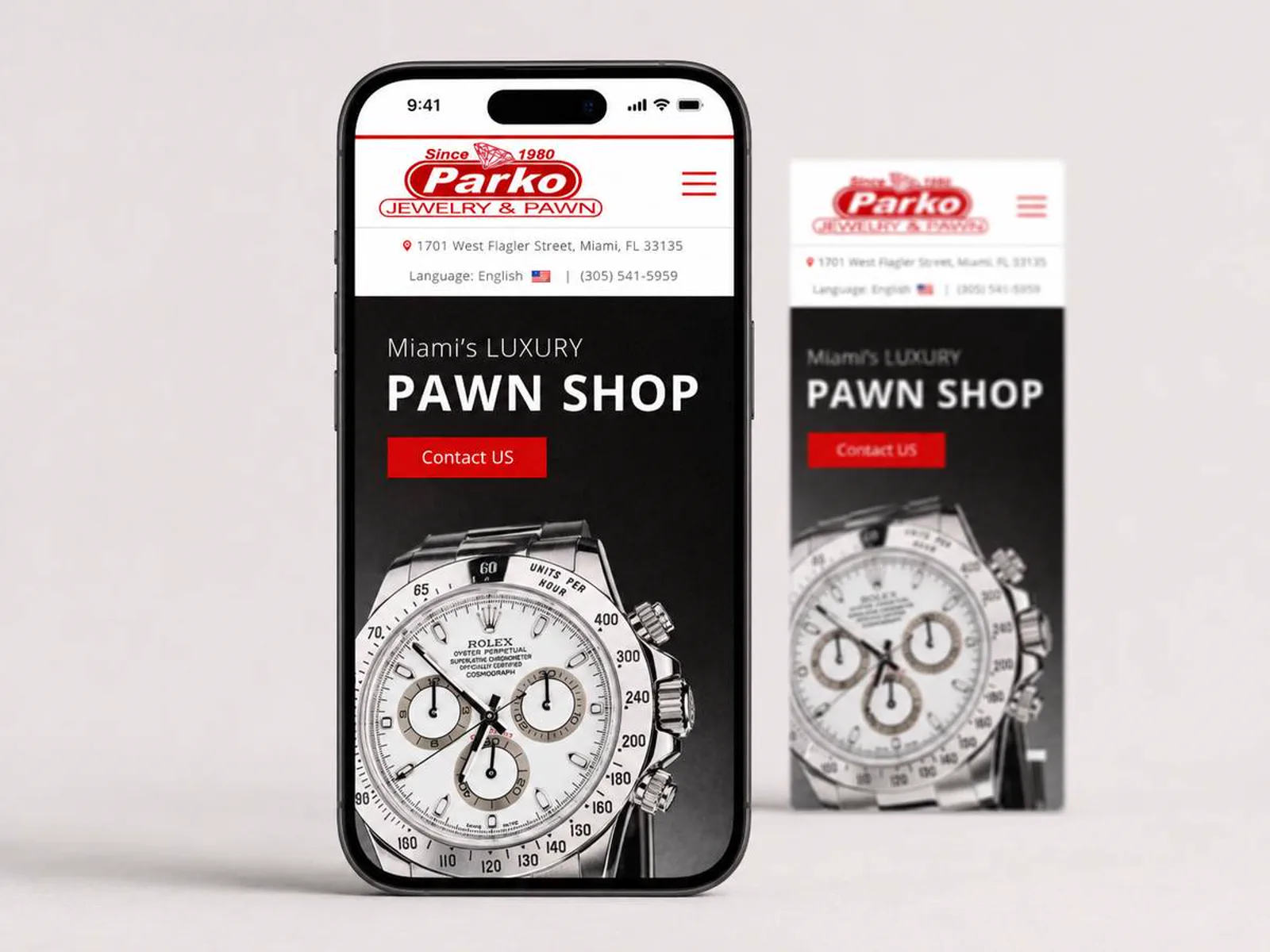
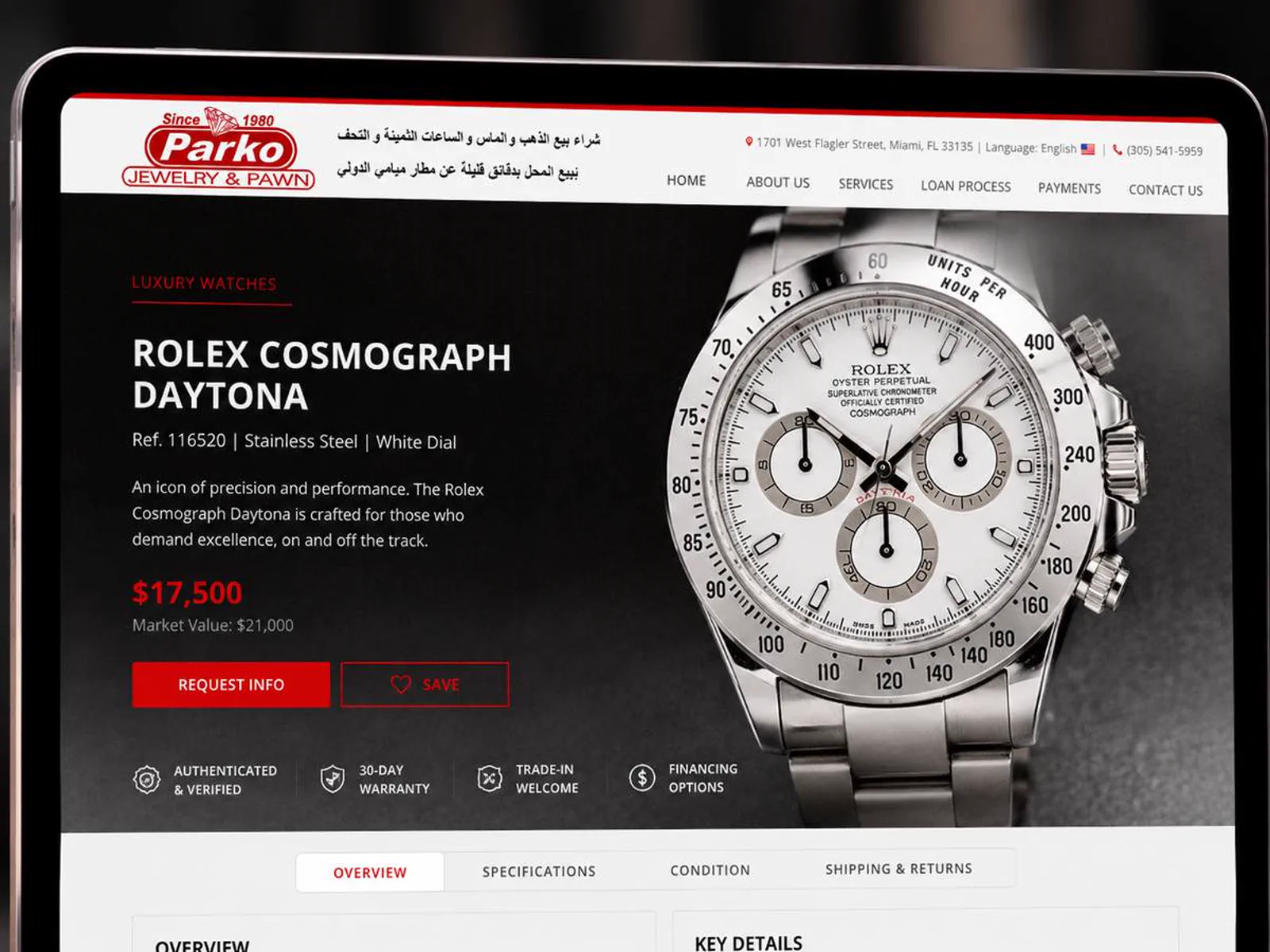
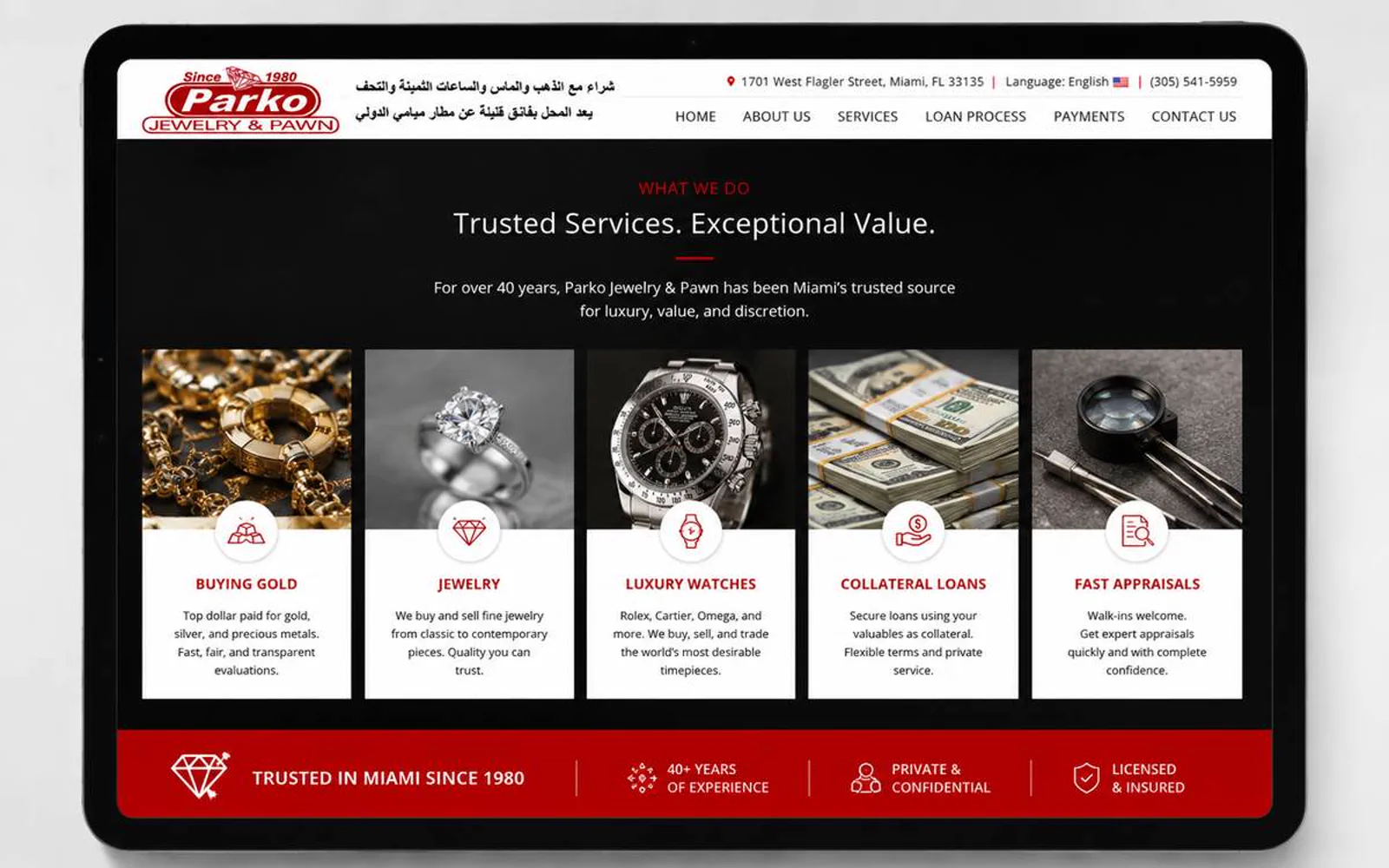
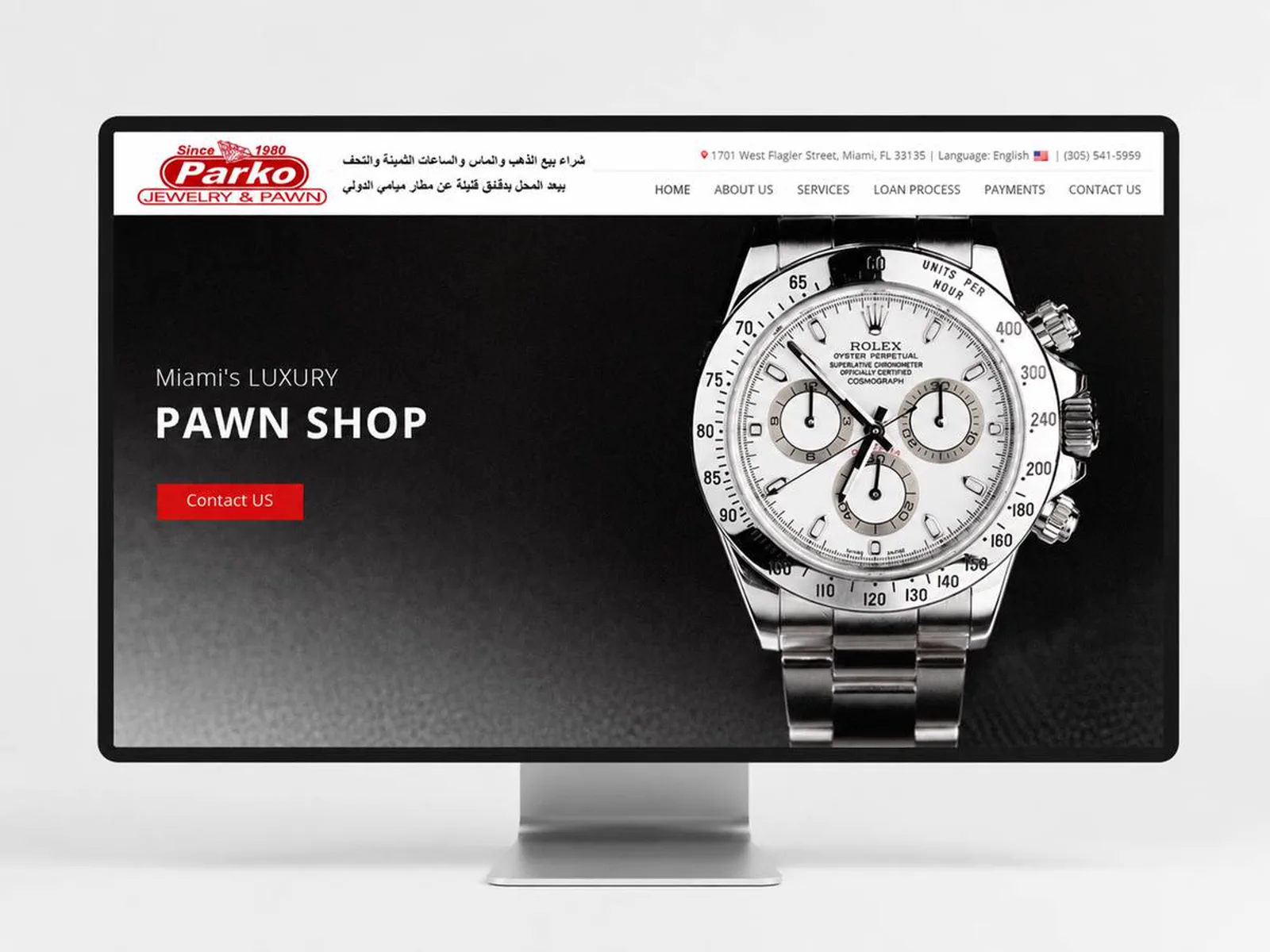
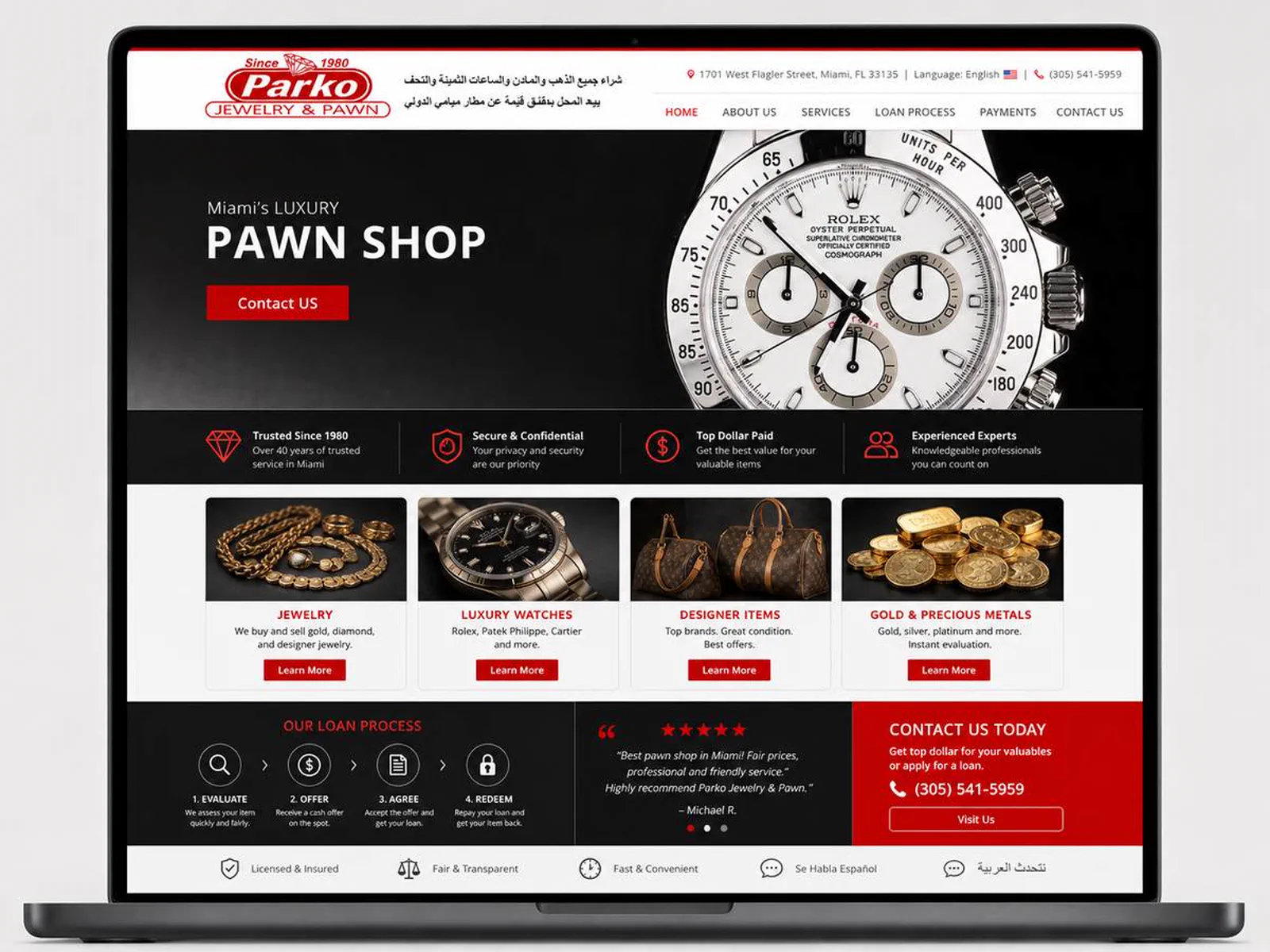
LER Web Services shaped Parko around clearer service categories, stronger product presentation, and direct contact paths.

Parko Jewelry and Pawn · Case study
A jewelry and pawn website direction built around trust, service clarity, and a more refined path for retail browsing and loan conversations.
Project story
Positioning, issues solved, scope, outcome, and the decisions behind the project.
Jewelry and pawn customers need reassurance around value, legitimacy, and next steps.
LER Web Services shaped Parko around clearer service categories, stronger product presentation, and direct contact paths.
Parko Jewelry and Pawn needed to make high-trust services feel clear and legitimate before a customer walks in or reaches out.
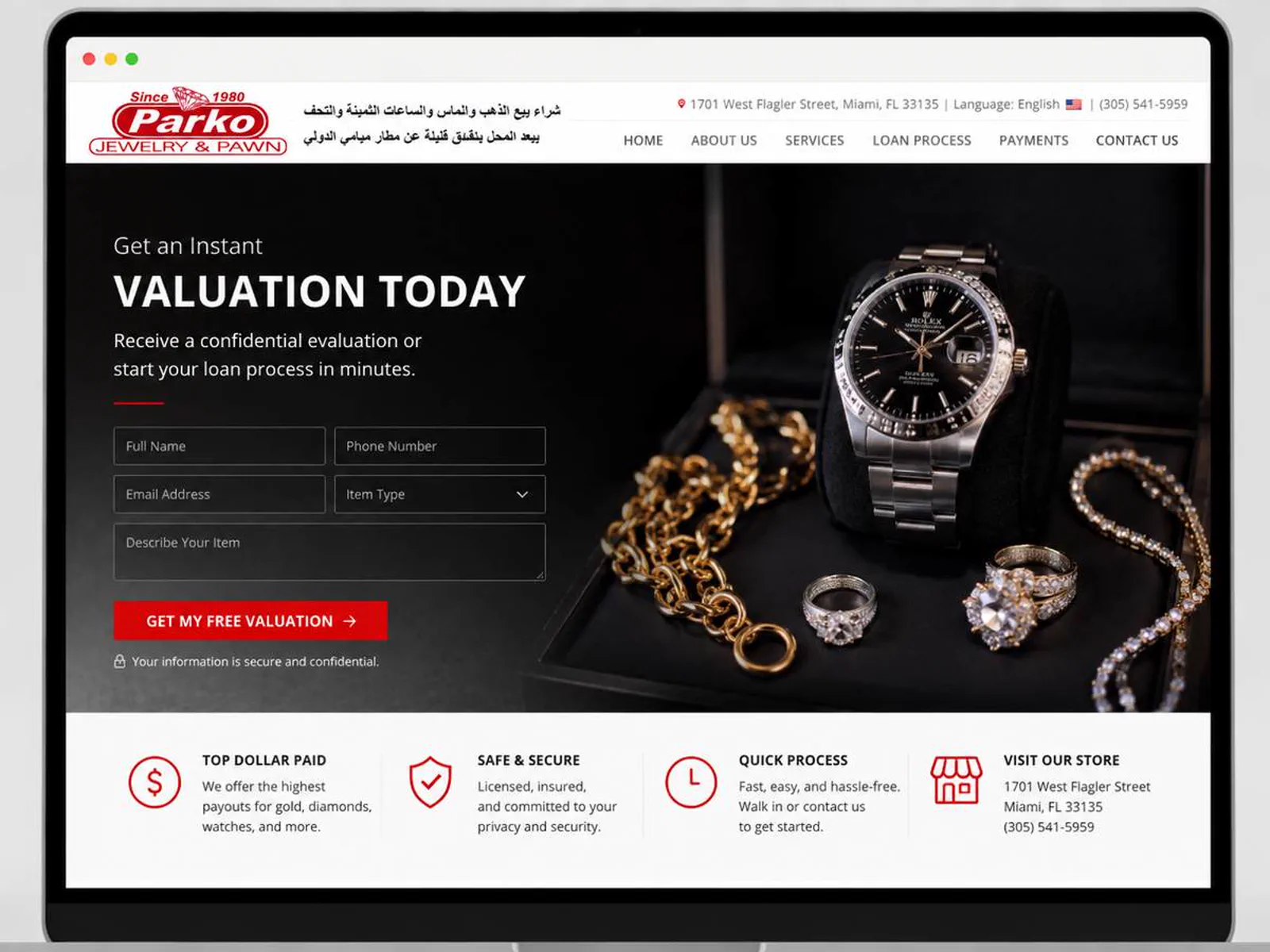
Parko now has a stronger direction for presenting jewelry, pawn services, and high-trust inquiries.
The project now presents high-trust services with clearer structure and a more polished retail feel.
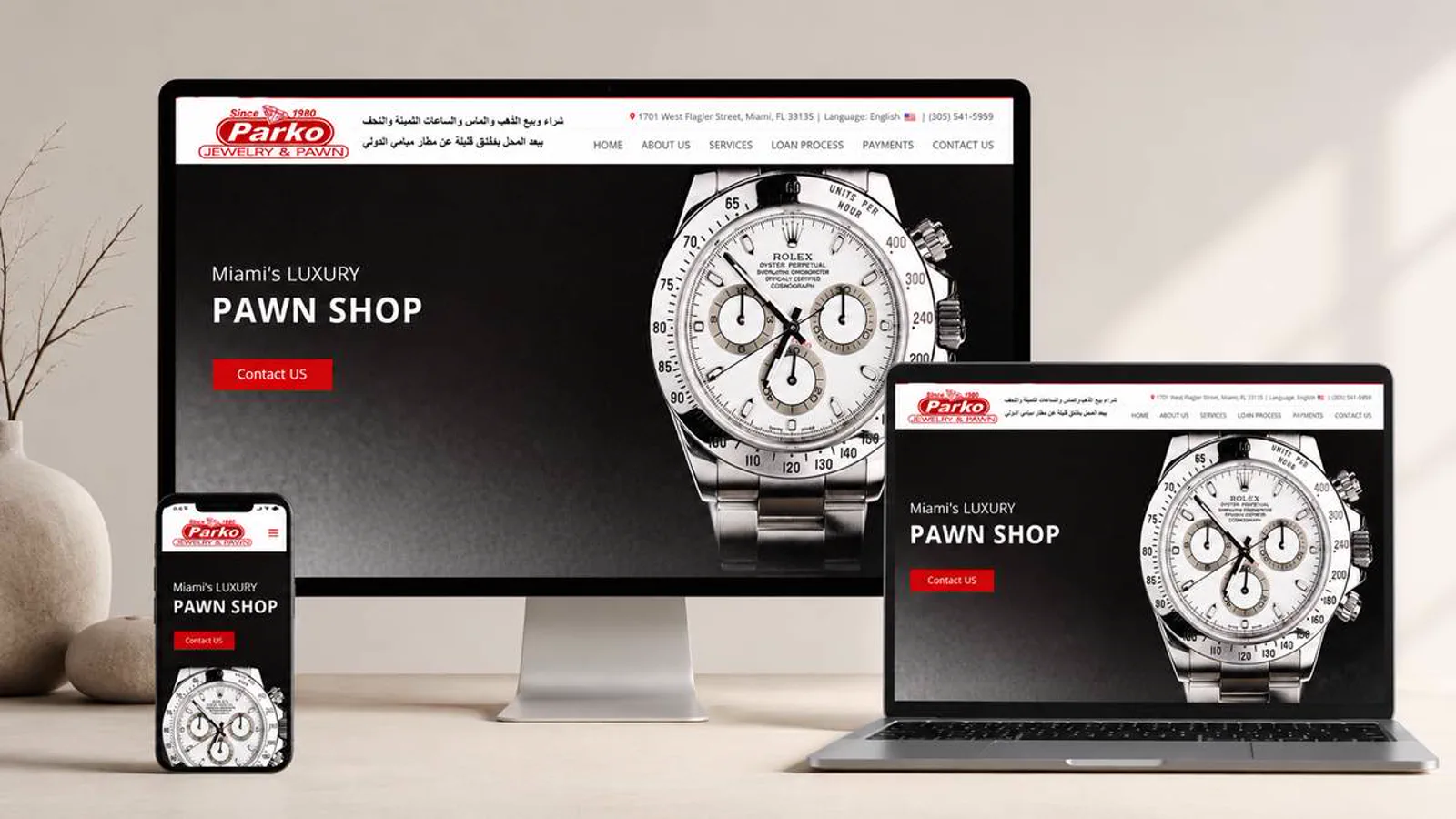
Parko Jewelry and Pawn now presents the business with clearer positioning, cleaner responsive screens, stronger content structure, and a calmer path from interest to action. The work brought Retail website UX, Service messaging, and Responsive design into one consistent public-facing experience.
Visual system
A concise record of the visual direction behind the project.
Editorial sans + practical hierarchy
The visual direction keeps the project clear, polished, and usable across desktop and mobile screens.
The copy direction stays direct: explain the value, reduce uncertainty, and make the next step easier to take.
A standard LER project path, adapted to the scope and available client material.
Discover
I clarified the audience, offer, and practical questions the website needed to answer.
Structure
I organized the page flow around service clarity, proof, and the next action a qualified visitor should take.
Design
I shaped the visual system and core screens so the experience could stay polished across devices.
Review
I reviewed the experience for visual consistency, responsive behavior, and clear paths to contact or purchase.
Project visuals
Selected screens, mockups, and brand moments from the project archive, normalized to the current WebP project library.