Valent Architect · Case study
An architecture practice, presented in full.
A custom WordPress build for a South Florida studio with twenty years of work behind it, shaped so the projects carry the practice and the studio can keep publishing without me.
What the site had to do.
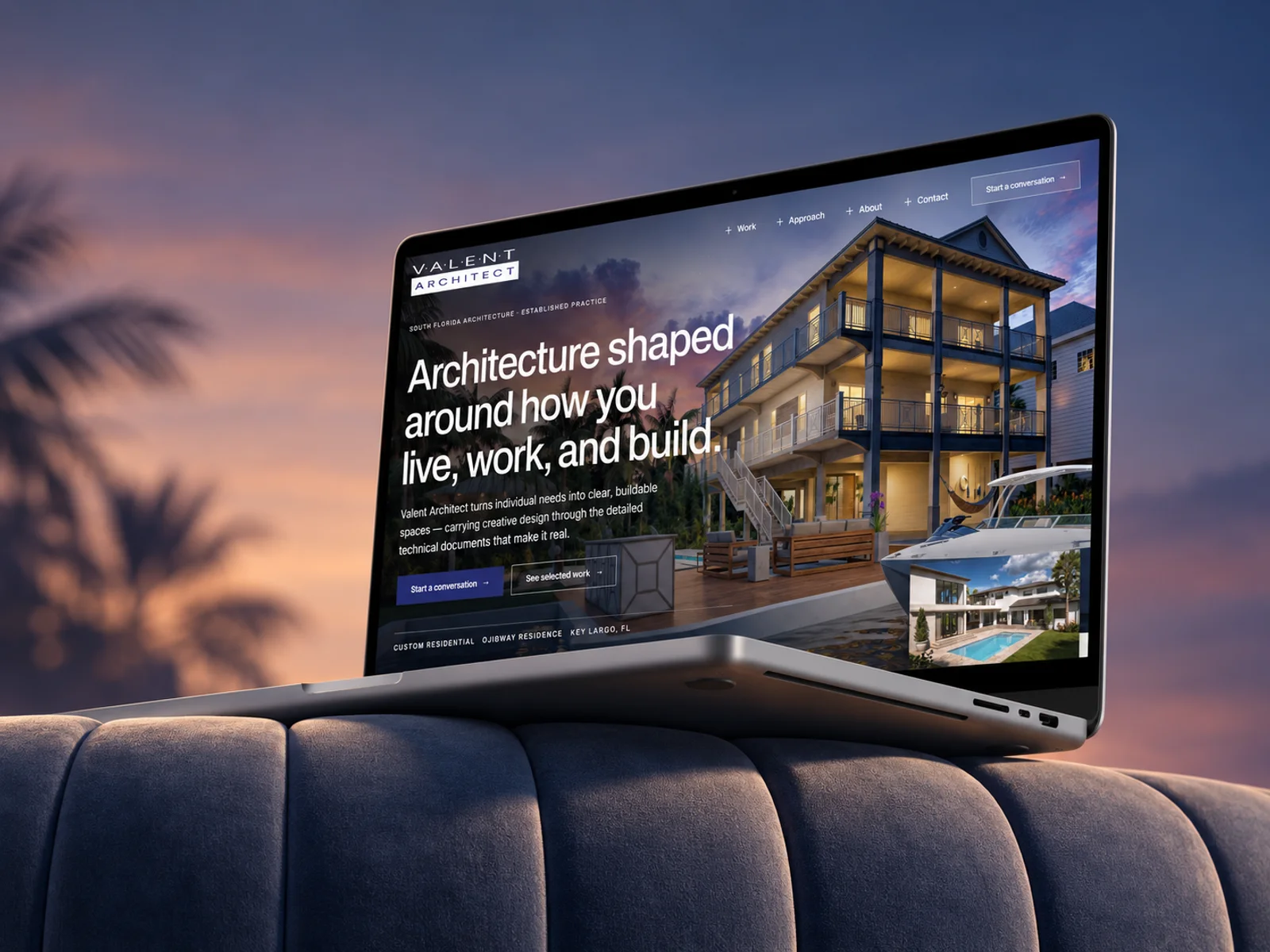
Patrick Valent has been designing homes and buildings across South Florida for more than twenty years, and the work is the argument. The site had to put the projects first and make the practice easy to understand before anyone picks up the phone.
I built it so the studio owns it: every page, photograph and project is editable in WordPress, without touching a template.
- 10Projects, filterable by sector
- 5Core pages, one hierarchy
- 20+Years of practice, on the page
- Sep 2026Launched
What had to change.
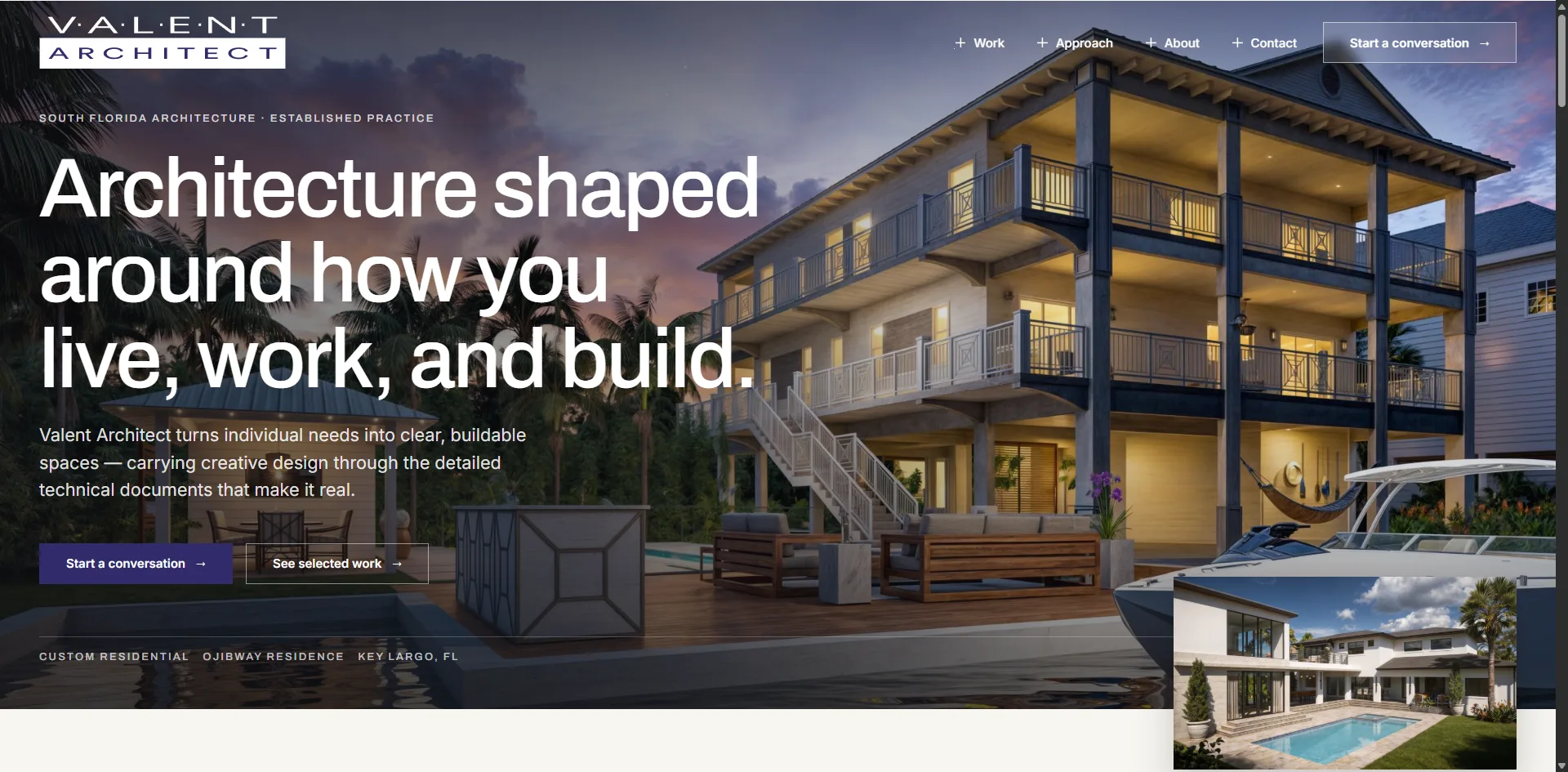
The work needed to lead, at the size the photography deserves.
Ten projects needed to be findable by sector, location and status, not scrolled past.
The practice's credentials needed to be plain: twenty years, NCARB certified, a Florida registration number.
The studio needed to add the next project itself, without calling me.
Screens
Every page, one system.
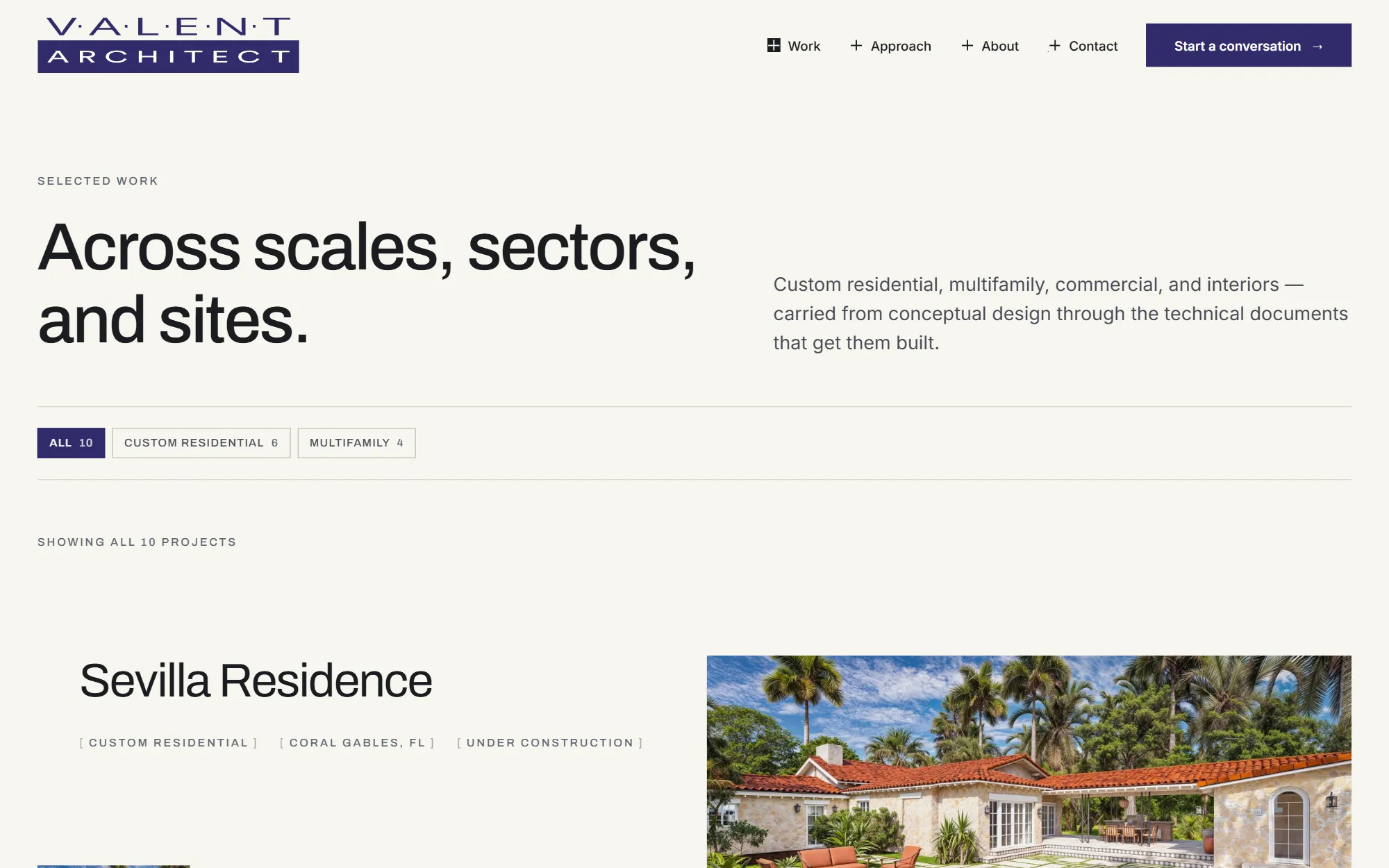
Home, work, a project page, approach, about and contact share one grid, one type scale and one accent, so the photography carries the difference between them.


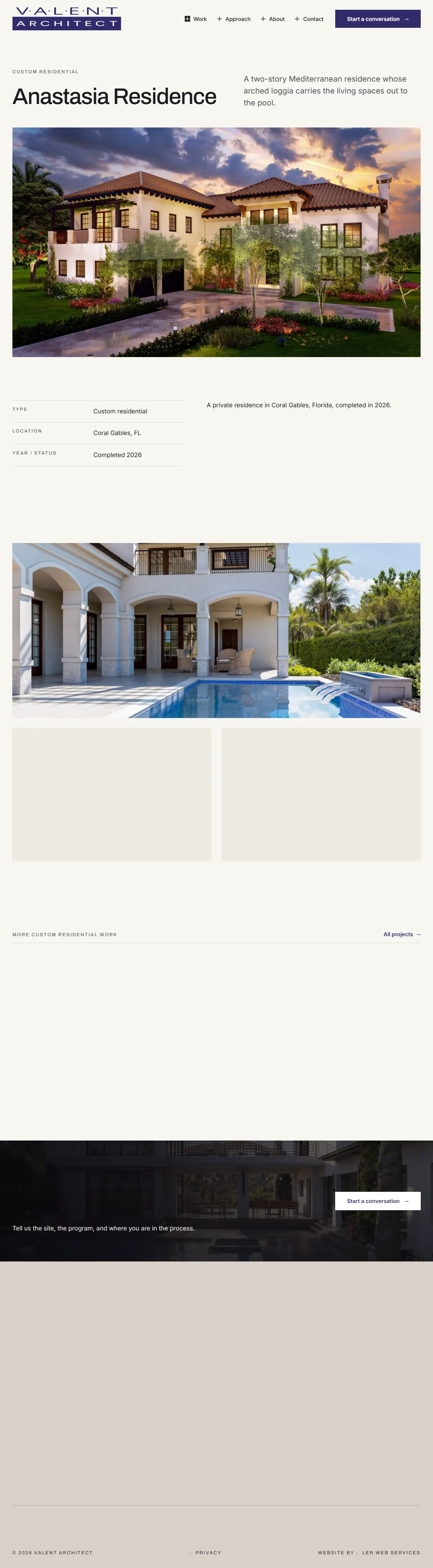

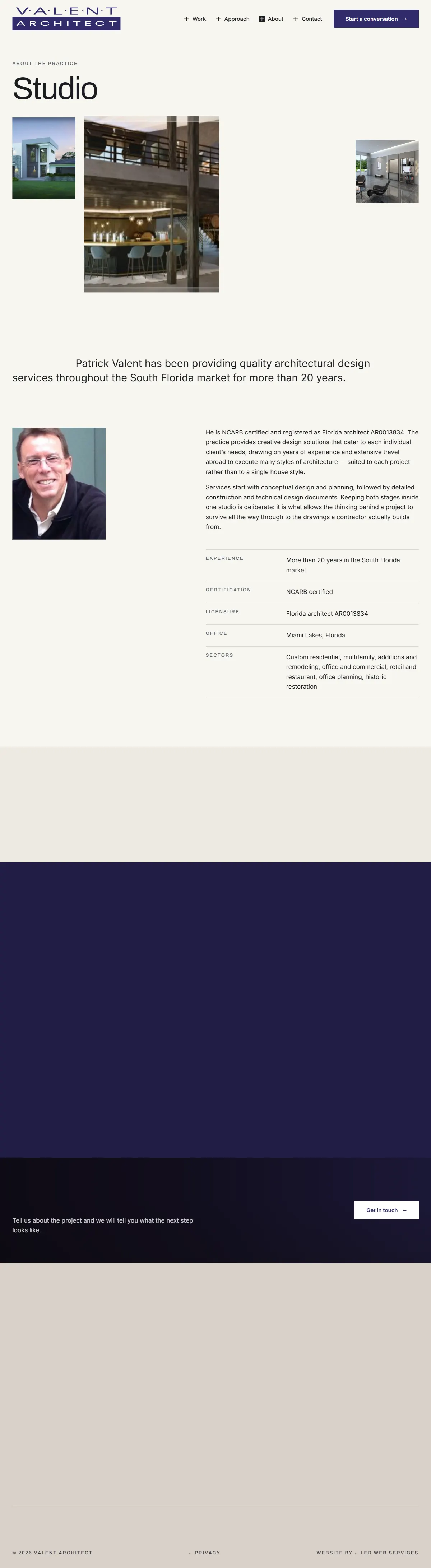
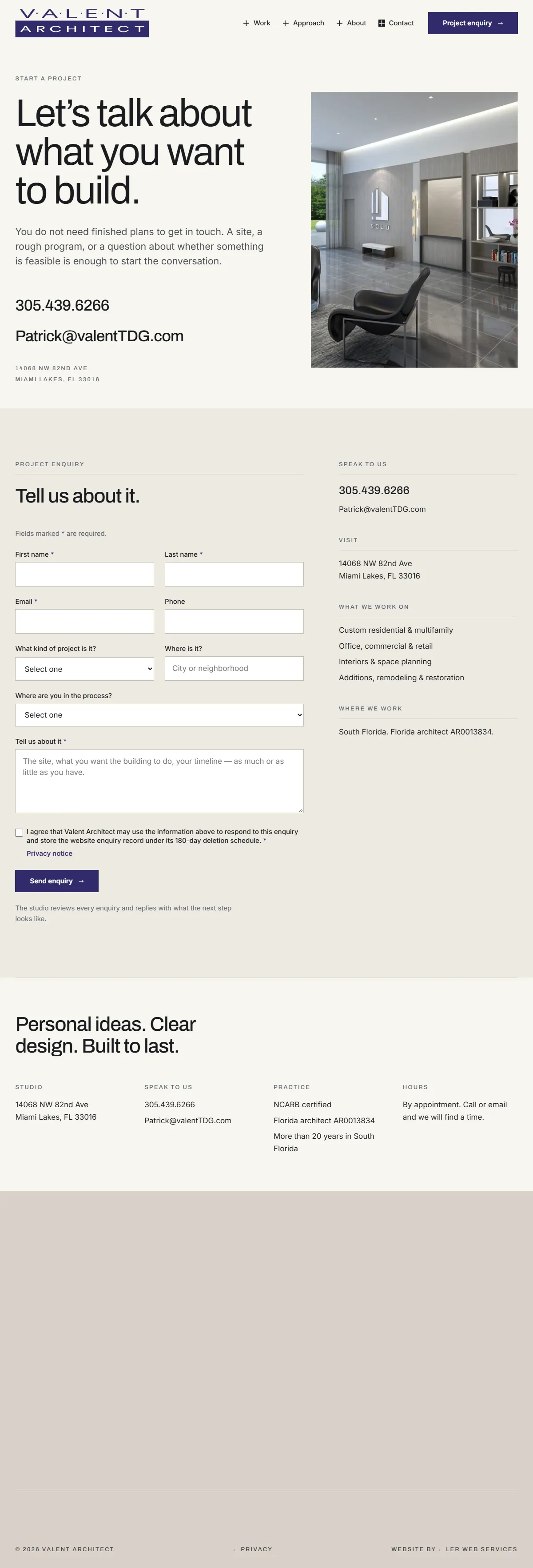
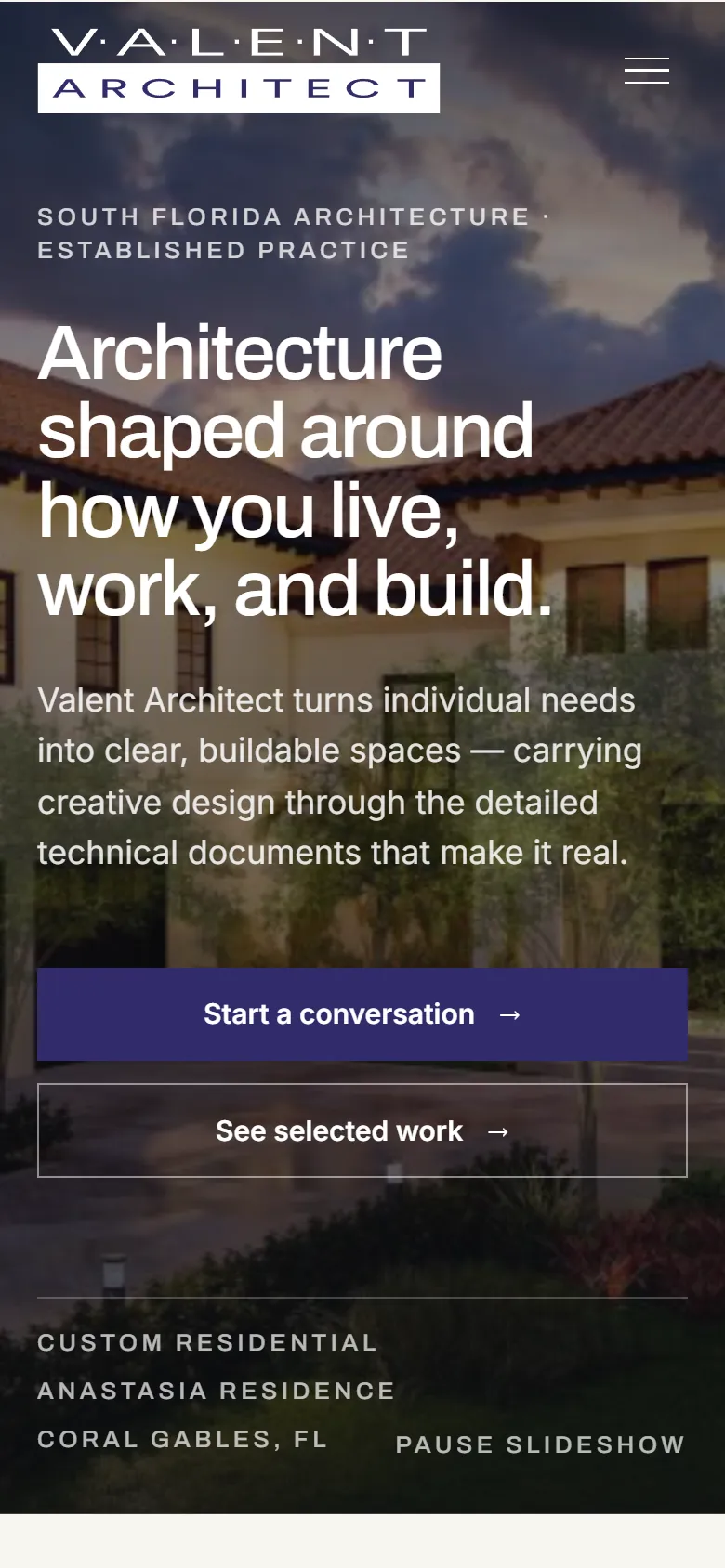
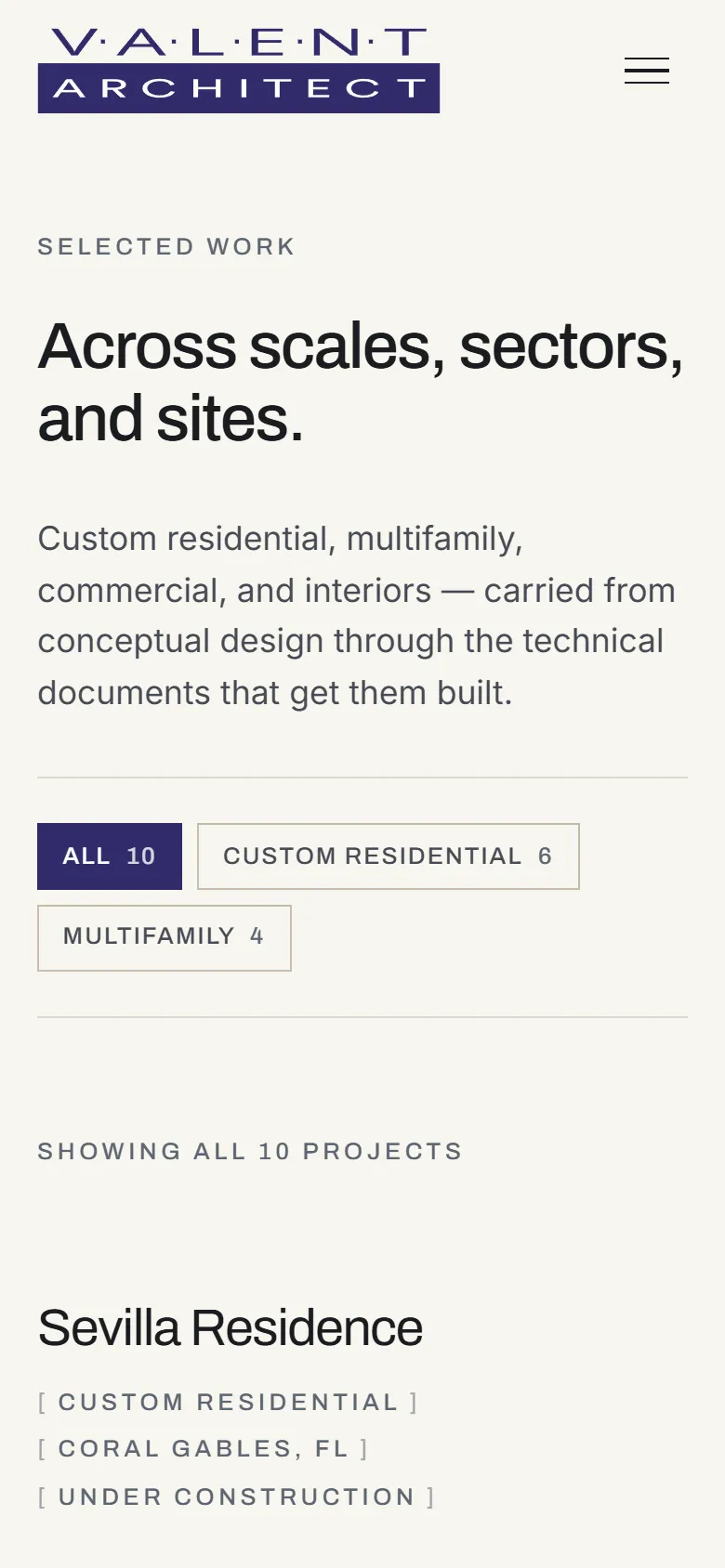
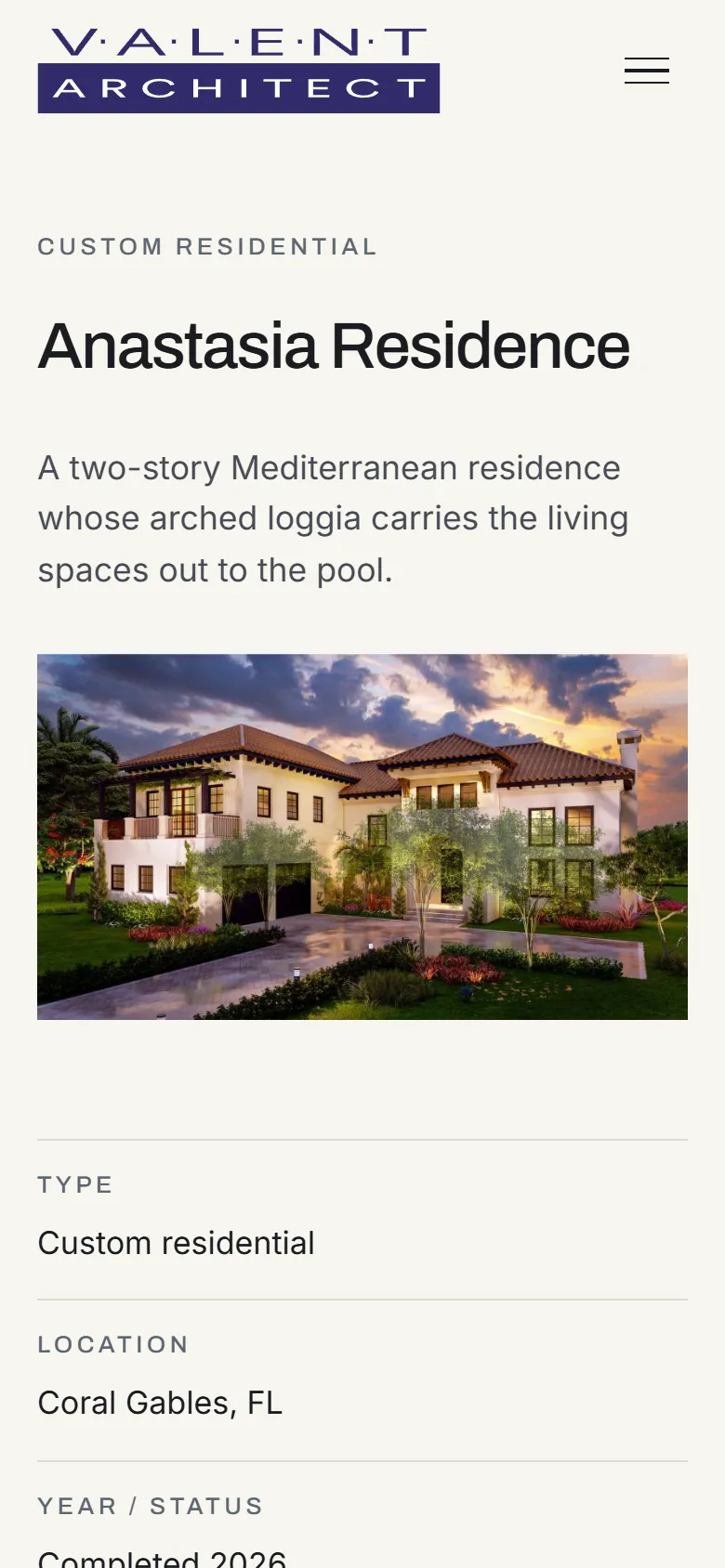
The same practice on a phone.
Most people meet an architect's work on a phone. The hero photograph, the project list and the way into a conversation keep the same order and the same weight there.
Visual system.
Indigo on a warm paper, with the renderings and photographs supplying the colour. Archivo sets the headings and labels, Inter sets the reading text, and nothing competes with the buildings.
Type · Archivo
- #211E45
- #302B6B
- #9A7D5D
- #D9D2C8
- #F7F5F0
Outcome.
Valent Architect now has a site that shows the work at full size, sorts ten projects by sector, location and status, and states the practice's credentials plainly.
The studio publishes the next project itself: page text, photographs, the homepage slideshow and the accent colour are all editable in WordPress, and enquiries reach the studio directly.
How this one came together.
Four steps, and what each one had to settle.
Structure
I settled what a visitor needs before calling an architect: the work, how the studio works, who it is, and one way to start a conversation.
Design direction
I built the type scale, grid and accent around full-bleed photography, so a rendering can run the width of the screen without the page falling apart around it.
A site the studio owns
I wrote a custom theme and a companion plugin that hold the project structure, so pages, photographs, the slideshow and the colours stay editable and the structure cannot be switched off by accident.
Launch
I moved the site onto the live domain in a staged cutover, with the previous site archived and every file verified against its checksum before and after.