
Blog
How Automation Helps Small Teams Follow Up Faster
 Ed Romero
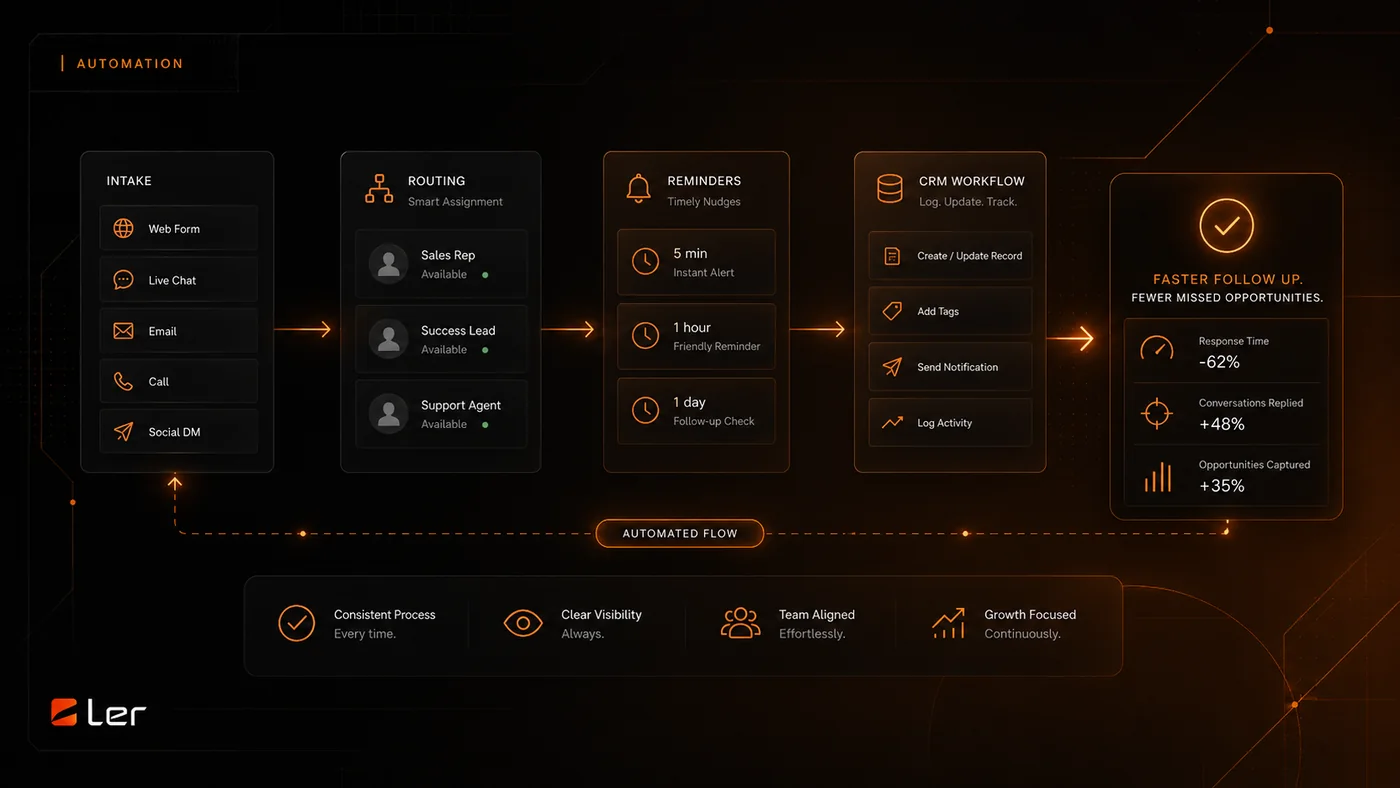
How smart intake, routing, reminders, and CRM workflows reduce missed opportunities.
Follow-up fails when work is invisible
Small teams do not usually miss leads because they do not care. They miss leads because inquiries arrive through too many places: forms, calls, texts, DMs, email, chat, and referrals.
Automation helps by turning those scattered inputs into visible next steps. A lead can be routed, logged, assigned, and reminded without relying on memory.
Start with the handoff, not the tool
Before choosing software, define what should happen after an inquiry arrives. Who sees it? What information is required? How fast should someone respond? What counts as qualified?
Those rules matter more than the platform. A simple workflow built around real behavior beats a complicated CRM nobody keeps clean.
Automate reminders and status changes
Useful automations include confirmation emails, internal notifications, missed-call follow-up, quote reminders, CRM status updates, and task creation after a form is submitted.
The goal is not to remove the human part. The goal is to make sure the human part happens on time.
Keep the workflow auditable
Every automation should be easy to explain. If no one knows what a workflow does, it becomes a risk. Document triggers, messages, owners, and where data goes.
Review automations when services, pricing, forms, or team responsibilities change. Old workflows can create wrong expectations if they are left unattended.
How to apply this this week
Pick one workflow connected to revenue or client experience. Write the current steps exactly as they happen, including the manual reminders, duplicated messages, and decisions that slow the team down.
Then choose one improvement that can be tested quickly: a better intake question, clearer notification, documented owner, status field, template, or follow-up reminder.
What to measure after the change
Measure whether the change reduced delay, confusion, rework, missed follow-up, or decision time. A useful improvement should make the next action easier to see.
If the metric improves but the team hates the workflow, keep refining. The best business systems are both measurable and usable.
Read what’s next

How to Choose Website KPIs That Matter
How to pick website metrics that connect to real business decisions instead of vanity reporting.

The Best Business Improvement Techniques
Practical ways to find bottlenecks, improve operations, and make better business decisions.
Affiliate Program vs. Agency Partner Program
How to choose between making a useful introduction and building a deeper delivery relationship with LERWS.

WordPress Maintenance Checklist for Business Owners
A practical WordPress maintenance checklist for business owners who want safer updates, stronger backups, and fewer website surprises.

SEO Checklist Before Launching a Redesigned Website
A pre-launch SEO checklist for redesigned websites covering redirects, metadata, content, analytics, speed, and search visibility.

Website Redesign Cost Factors for Established Businesses
A plain-English breakdown of the factors that change website redesign scope, complexity, and timeline without publishing private project pricing.