
Blog
The Best Business Improvement Techniques
 Ed Romero

Practical ways to find bottlenecks, improve operations, and make better business decisions.
Look for repeated friction
The best improvement opportunities are usually repeated, not dramatic. Look for questions the team answers every day, tasks that stall, leads that go cold, approvals that take too long, and handoffs that depend on one person remembering.
Repeated friction is expensive because it compounds. Fixing one recurring bottleneck can free up time every week.
Map the current workflow honestly
Before improving a process, map what actually happens. Include the shortcuts, delays, tools, messages, and manual steps. A polished version of the workflow will not reveal the real problem.
Once the current state is visible, identify where information gets lost, where decisions wait, and where clients or staff experience confusion.
Improve one constraint at a time
Do not try to rebuild operations all at once. Choose the constraint that blocks the most value: intake, scheduling, quoting, follow-up, payment, fulfillment, reporting, or support.
A focused improvement is easier to test. If it works, keep it. If it creates new friction, adjust before expanding the system.
Use tools only after the process is clear
Software can support better operations, but it cannot fix an unclear workflow. Choose tools after the roles, rules, and outcomes are defined.
For small teams, the best system is often simple: cleaner forms, clearer notifications, a shared board, a CRM stage, and a weekly review habit.
How to apply this this week
Pick one workflow connected to revenue or client experience. Write the current steps exactly as they happen, including the manual reminders, duplicated messages, and decisions that slow the team down.
Then choose one improvement that can be tested quickly: a better intake question, clearer notification, documented owner, status field, template, or follow-up reminder.
What to measure after the change
Measure whether the change reduced delay, confusion, rework, missed follow-up, or decision time. A useful improvement should make the next action easier to see.
If the metric improves but the team hates the workflow, keep refining. The best business systems are both measurable and usable.
Read what’s next

How to Choose Website KPIs That Matter
How to pick website metrics that connect to real business decisions instead of vanity reporting.
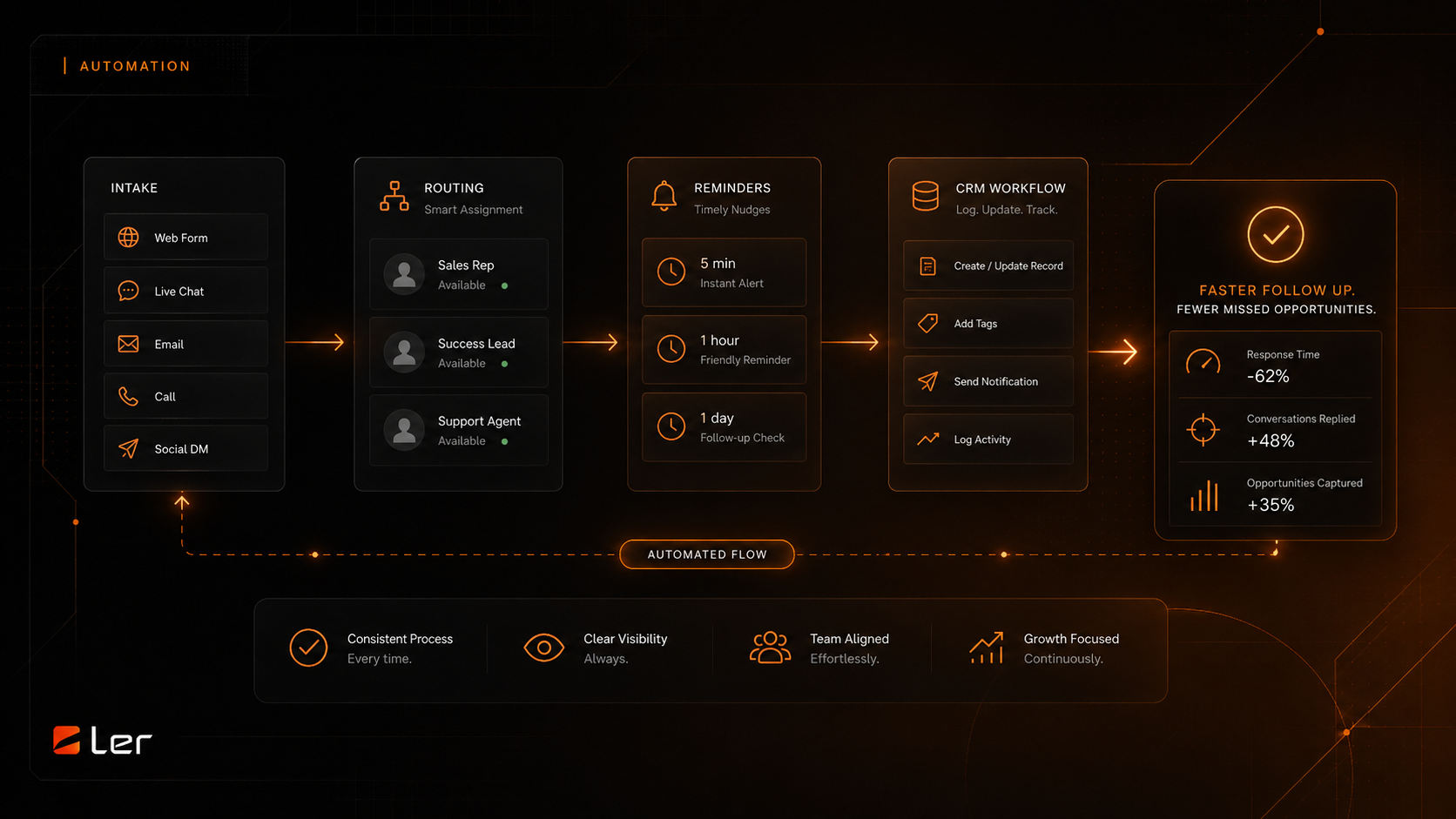
How Automation Helps Small Teams Follow Up Faster
How smart intake, routing, reminders, and CRM workflows reduce missed opportunities.
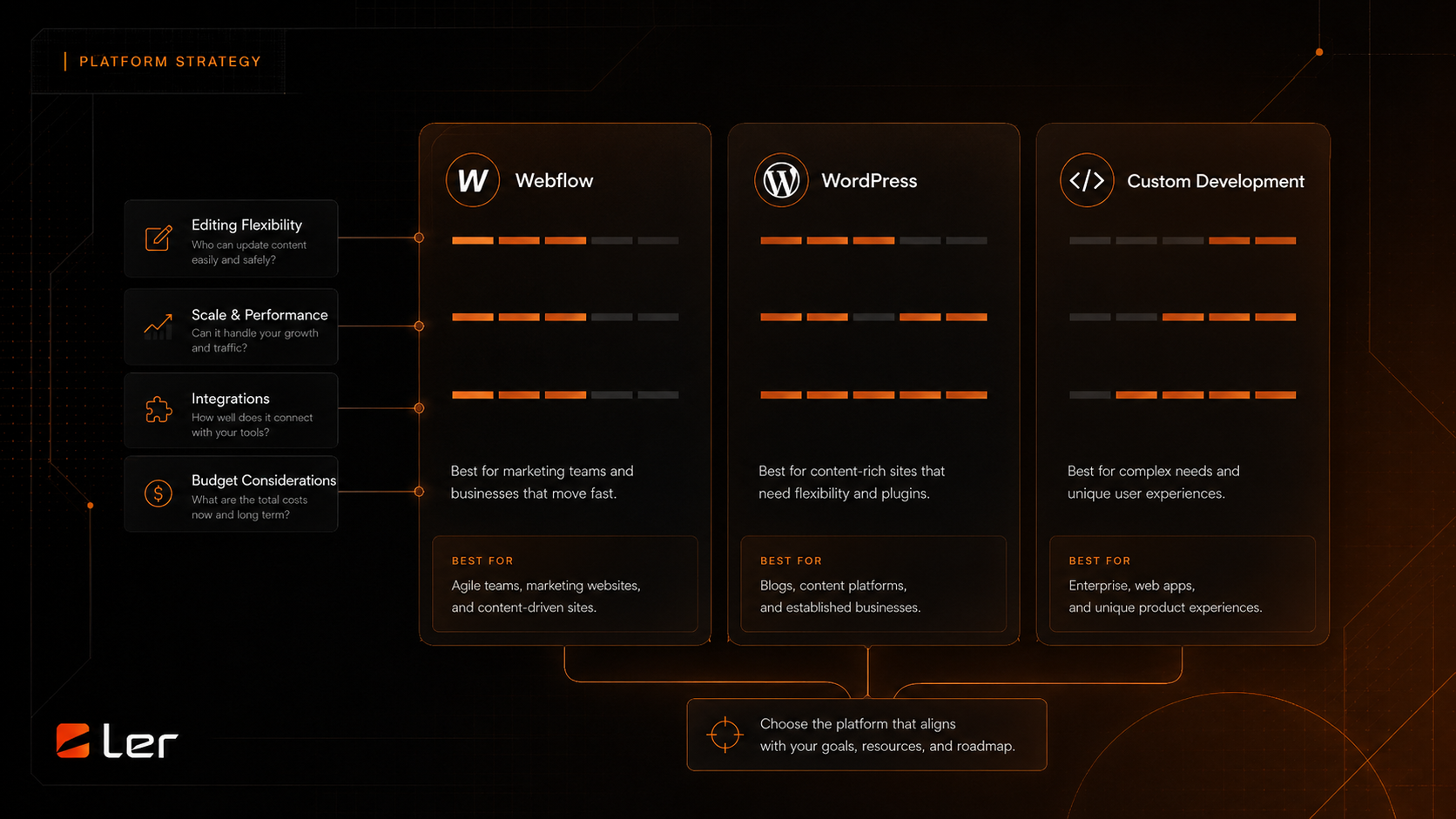
Affiliate Program vs. Agency Partner Program
How to choose between making a useful introduction and building a deeper delivery relationship with LERWS.

WordPress Maintenance Checklist for Business Owners
A practical WordPress maintenance checklist for business owners who want safer updates, stronger backups, and fewer website surprises.

SEO Checklist Before Launching a Redesigned Website
A pre-launch SEO checklist for redesigned websites covering redirects, metadata, content, analytics, speed, and search visibility.

Website Redesign Cost Factors for Established Businesses
A plain-English breakdown of the factors that change website redesign scope, complexity, and timeline without publishing private project pricing.