
Blog
Signs Your Brand Looks Less Established Than Your Business
 Ed Romero

How visual inconsistency, unclear messaging, and weak proof can make a strong business feel smaller online.
The business has matured, but the signals have not
A company can outgrow its brand quietly. The work improves, clients get better, prices rise, and operations mature, but the website still looks like the earlier version of the business.
That mismatch creates friction. Prospects judge the company from the signals available to them: visuals, copy, proof, speed, and how confidently the offer is presented.
Inconsistency makes the company feel smaller
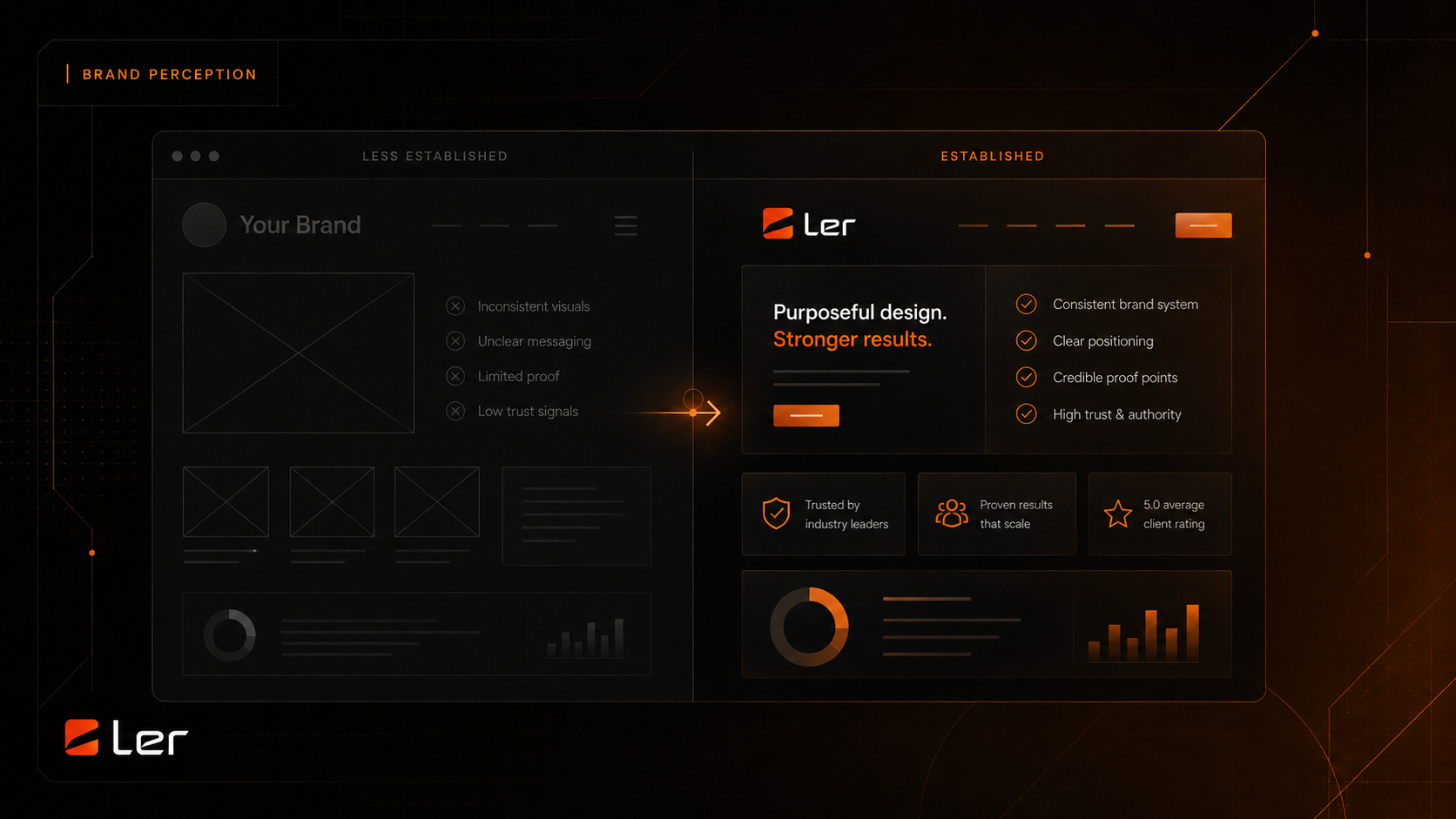
Different logos, colors, button styles, image treatments, and page layouts can make a business feel less organized than it is. Consistency is not about being rigid. It is about reducing doubt.
When every touchpoint feels connected, the company appears more stable and easier to trust.
The message sounds interchangeable
A less-established brand often relies on broad phrases: quality service, best solutions, dedicated team, affordable pricing. Those phrases do not explain why the business is the right choice.
Sharper messaging names the audience, problem, outcome, process, and proof. It gives the brand a position instead of a slogan.
Proof is hidden or underdeveloped
Established businesses usually have credibility, but the site may not show it clearly. Case studies, reviews, logos, project visuals, certifications, and process detail should support the claims visitors are being asked to believe.
If proof exists but is buried, the brand feels weaker than the company behind it.
How to apply this to your site
Choose one important page and review it through the visitor's lens. Ask what the visitor needs to understand, believe, and do before they are ready for the next step.
Then look for the first point of friction: vague copy, weak proof, slow loading, too many choices, missing service details, unclear pricing signals, or a call to action that does not match intent.
What LER looks for in a review
I look at message clarity, page structure, proof placement, mobile behavior, conversion paths, speed, maintenance risk, and whether the website matches the real maturity of the business.
The best recommendations are prioritized. A website rarely needs every possible improvement at once; it needs the next right improvement in the right order.
Read what’s next
Affiliate Program vs. Agency Partner Program
How to choose between making a useful introduction and building a deeper delivery relationship with LERWS.
How to Keep Brand Consistency Across Locations
How multi-location and growing service brands can stay consistent without making every page feel identical.
Why Small Businesses Fail and How to Fix It
Common small-business failure points and practical ways to build stronger foundations.

WordPress Maintenance Checklist for Business Owners
A practical WordPress maintenance checklist for business owners who want safer updates, stronger backups, and fewer website surprises.

SEO Checklist Before Launching a Redesigned Website
A pre-launch SEO checklist for redesigned websites covering redirects, metadata, content, analytics, speed, and search visibility.

Website Redesign Cost Factors for Established Businesses
A plain-English breakdown of the factors that change website redesign scope, complexity, and timeline without publishing private project pricing.