
Blog
Why Small Businesses Fail and How to Fix It
 Ed Romero
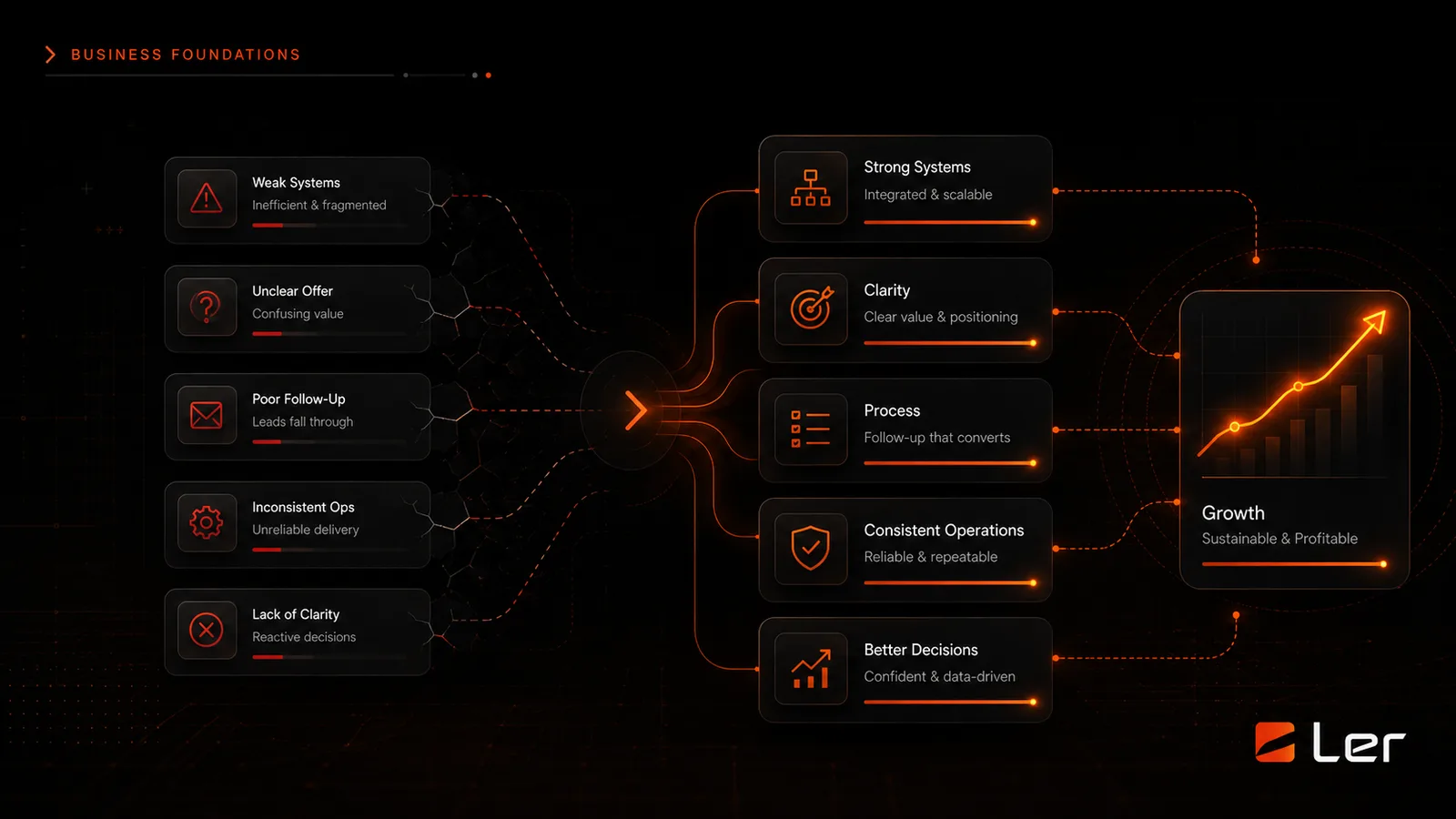
Common small-business failure points and practical ways to build stronger foundations.
Failure is often a systems problem
Small businesses rarely struggle because of one dramatic mistake. More often, weak positioning, inconsistent lead flow, poor follow-up, unclear pricing, and operational overload compound over time.
The fix starts by identifying which system is creating the most pressure. Trying to improve everything at once usually creates more noise.
Unclear positioning weakens demand
When a business cannot explain who it helps and why it is different, marketing gets expensive. The website, ads, sales calls, and referrals all have to work harder.
Clear positioning makes it easier for the right people to recognize fit and for the wrong people to opt out.
Poor follow-up wastes opportunity
Many businesses work hard to generate leads, then lose them through slow response, unclear handoff, missing reminders, or no consistent tracking.
A simple follow-up system can protect revenue: intake form, notification, owner, deadline, status, and a next action.
Stronger foundations create more room
Better messaging, cleaner workflows, maintained systems, and reliable reporting do not guarantee growth, but they reduce avoidable drag.
A stronger business foundation gives owners more room to make good decisions instead of reacting to whatever broke last.
How to apply this to your site
Choose one important page and review it through the visitor's lens. Ask what the visitor needs to understand, believe, and do before they are ready for the next step.
Then look for the first point of friction: vague copy, weak proof, slow loading, too many choices, missing service details, unclear pricing signals, or a call to action that does not match intent.
What LER looks for in a review
I look at message clarity, page structure, proof placement, mobile behavior, conversion paths, speed, maintenance risk, and whether the website matches the real maturity of the business.
The best recommendations are prioritized. A website rarely needs every possible improvement at once; it needs the next right improvement in the right order.
Read what’s next
Affiliate Program vs. Agency Partner Program
How to choose between making a useful introduction and building a deeper delivery relationship with LERWS.

How to Keep Brand Consistency Across Locations
How multi-location and growing service brands can stay consistent without making every page feel identical.

Signs Your Brand Looks Less Established Than Your Business
How visual inconsistency, unclear messaging, and weak proof can make a strong business feel smaller online.

WordPress Maintenance Checklist for Business Owners
A practical WordPress maintenance checklist for business owners who want safer updates, stronger backups, and fewer website surprises.

SEO Checklist Before Launching a Redesigned Website
A pre-launch SEO checklist for redesigned websites covering redirects, metadata, content, analytics, speed, and search visibility.

Website Redesign Cost Factors for Established Businesses
A plain-English breakdown of the factors that change website redesign scope, complexity, and timeline without publishing private project pricing.