
Blog
Creating a HIPAA Compliance Website
 Ed Romero
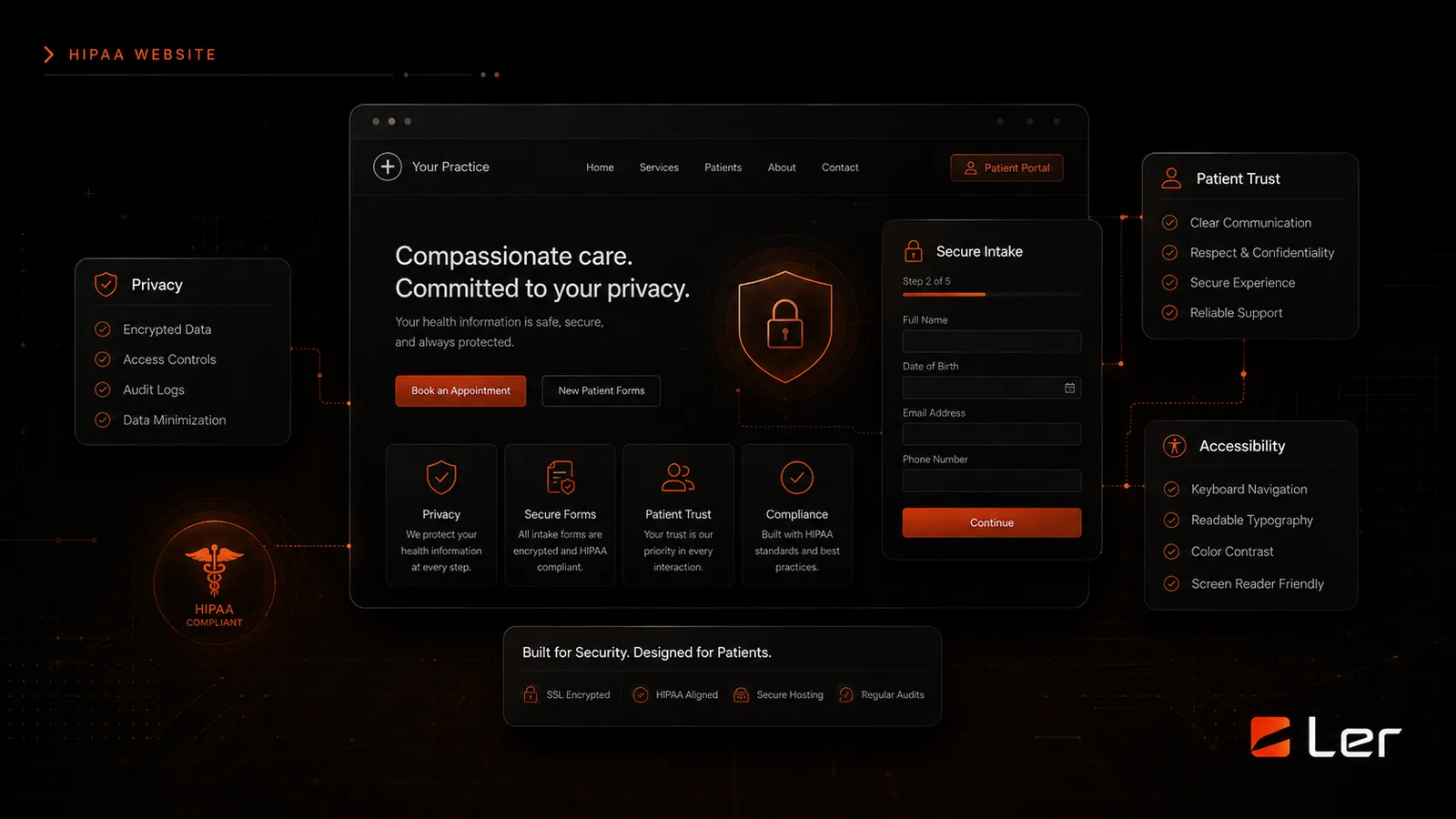
Considerations for healthcare websites that need to protect trust, privacy, and patient expectations.
Start by knowing whether HIPAA applies
HIPAA responsibilities depend on the organization, the data, and the relationship to protected health information. Covered entities and business associates have obligations that a general marketing site may not have in the same way.
The U.S. Department of Health and Human Services (opens in a new tab) explains that business associates can be directly liable for certain HIPAA Rules, and the Security Rule summary (opens in a new tab) focuses on protecting electronic protected health information. Use official guidance and legal counsel for compliance decisions.
Separate marketing from intake
Many healthcare websites are safe to browse as marketing sites, but forms, chat, booking, portals, uploads, and email workflows can change the risk profile if they collect sensitive patient information.
Do not ask for diagnosis details, insurance information, medical history, or other sensitive data in a standard contact form unless the workflow has been reviewed for privacy and security requirements.
Think in safeguards, not badges
HHS describes the HIPAA Security Rule in terms of administrative, physical, and technical safeguards for electronic protected health information. A website project should support that broader program rather than promise compliance from design alone.
Practical web decisions include secure hosting, SSL, access control, logging, form handling, vendor review, backups, least-privilege access, and clear policies for where submissions go.
Use careful language
Do not claim "HIPAA compliant" because a plugin, form, or host advertises a feature. Compliance depends on configuration, agreements, processes, and how the organization actually handles information.
A better website goal is privacy-aware structure: collect only what is needed, route it safely, avoid unnecessary exposure, and tell patients what to expect.
How to use this responsibly
Treat website recommendations as part of a larger privacy and security program, not as legal advice. HIPAA-specific decisions should be reviewed against official guidance, internal policies, business associate agreements, and counsel where appropriate.
The website team can reduce unnecessary exposure, improve secure handling, and build privacy-aware workflows, but compliance depends on the organization operating the process correctly.
What to review next
Review every place the site collects, stores, transmits, or displays sensitive information: forms, chat, booking tools, portals, analytics, email notifications, uploads, and third-party embeds.
If any of those workflows may involve ePHI, confirm the vendor relationship, access controls, retention behavior, and whether a different intake path is needed.
Read what’s next
Affiliate Program vs. Agency Partner Program
How to choose between making a useful introduction and building a deeper delivery relationship with LERWS.

WordPress Maintenance Checklist for Business Owners
A practical WordPress maintenance checklist for business owners who want safer updates, stronger backups, and fewer website surprises.

SEO Checklist Before Launching a Redesigned Website
A pre-launch SEO checklist for redesigned websites covering redirects, metadata, content, analytics, speed, and search visibility.

Website Redesign Cost Factors for Established Businesses
A plain-English breakdown of the factors that change website redesign scope, complexity, and timeline without publishing private project pricing.

Local Service Landing Page Structure That Converts
A practical structure for local service landing pages that need clearer offers, stronger proof, better location signals, and more qualified inquiries.

How to Choose Website KPIs That Matter
How to pick website metrics that connect to real business decisions instead of vanity reporting.