
Blog
Website Redesign Checklist for Established Businesses
 Ed Romero
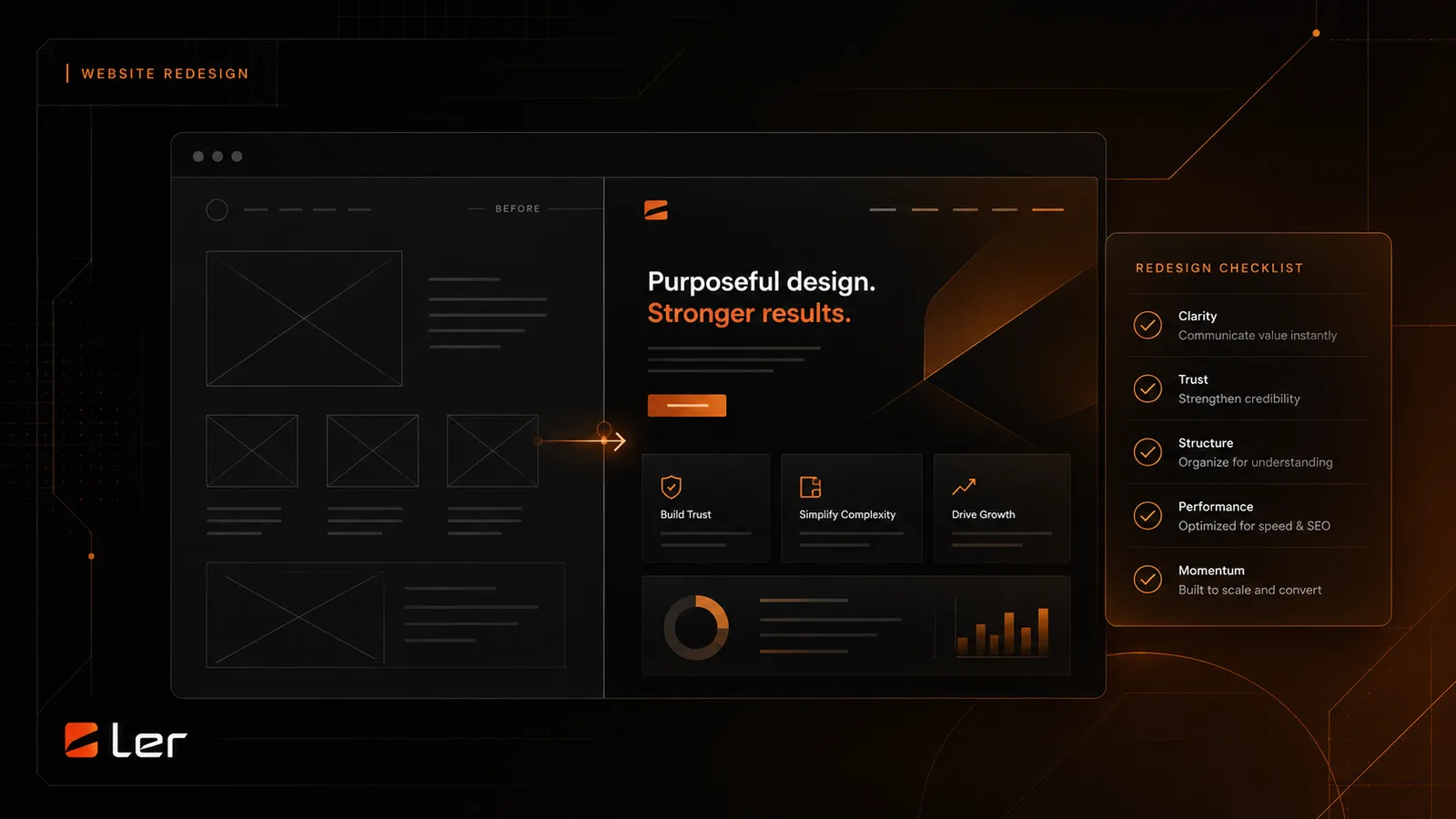
A practical checklist for redesigning a website without losing clarity, trust, or momentum.
Start with business reasons, not taste
A redesign should begin with the business problem. Are leads unqualified? Are prospects asking questions the website should already answer? Does the brand feel smaller than the company has become? Those answers matter more than whether the old site feels tired.
Write down the decision you want the new site to support: book a consultation, request a quote, buy a product, understand services, or trust the company faster. That decision becomes the filter for structure, copy, and design.
Audit the pages that already carry weight
Before designing new pages, review the current pages that get traffic, inquiries, backlinks, or sales. Keep what is working. Remove what creates confusion. A redesign should not erase useful search value or proven conversion paths just because the visuals are changing.
Check forms, calls to action, service pages, case studies, navigation, page speed, mobile behavior, analytics, and the questions sales still answers manually. Those gaps become the redesign backlog.
Protect proof, trust, and search value
Established businesses usually have proof: clients, projects, reviews, certifications, before-and-after work, media, process, or operational maturity. Put that proof near the claims it supports. Do not leave all trust signals at the bottom of the site.
If URLs are changing, plan redirects. If service pages are being rewritten, preserve the intent that brought qualified visitors there. Redesigns fail when they improve presentation while weakening discoverability.
Launch with a measurement plan
Decide what will be measured before launch: qualified inquiries, booking clicks, form completions, calls, checkout behavior, speed, and content engagement. The goal is not more dashboards. The goal is knowing whether the site is doing its job.
After launch, review the first signals quickly. Small fixes in the first few weeks can protect momentum and keep the redesign from becoming a one-time event.
How to apply this to your site
Choose one important page and review it through the visitor's lens. Ask what the visitor needs to understand, believe, and do before they are ready for the next step.
Then look for the first point of friction: vague copy, weak proof, slow loading, too many choices, missing service details, unclear pricing signals, or a call to action that does not match intent.
What LER looks for in a review
I look at message clarity, page structure, proof placement, mobile behavior, conversion paths, speed, maintenance risk, and whether the website matches the real maturity of the business.
The best recommendations are prioritized. A website rarely needs every possible improvement at once; it needs the next right improvement in the right order.
Read what’s next

SEO Checklist Before Launching a Redesigned Website
A pre-launch SEO checklist for redesigned websites covering redirects, metadata, content, analytics, speed, and search visibility.

Website Redesign Cost Factors for Established Businesses
A plain-English breakdown of the factors that change website redesign scope, complexity, and timeline without publishing private project pricing.
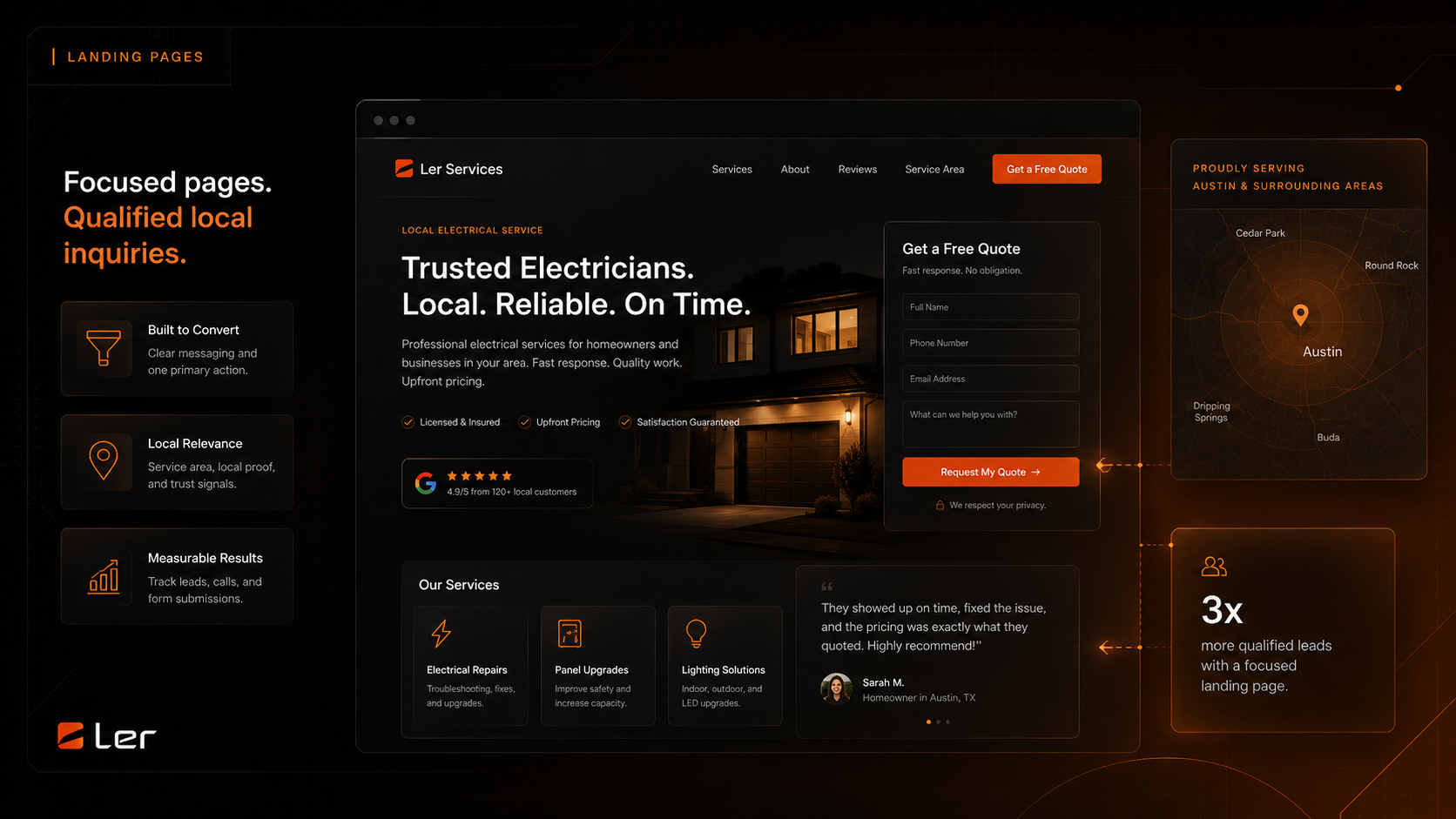
Local Service Landing Page Structure That Converts
A practical structure for local service landing pages that need clearer offers, stronger proof, better location signals, and more qualified inquiries.

What to Prepare Before a Website Growth Audit
What to gather before a website audit so the recommendations are sharper and easier to act on.

Why Your Contact Form Is Not Enough
Why better intake, routing, confirmation, and follow-up matter after the form submission.
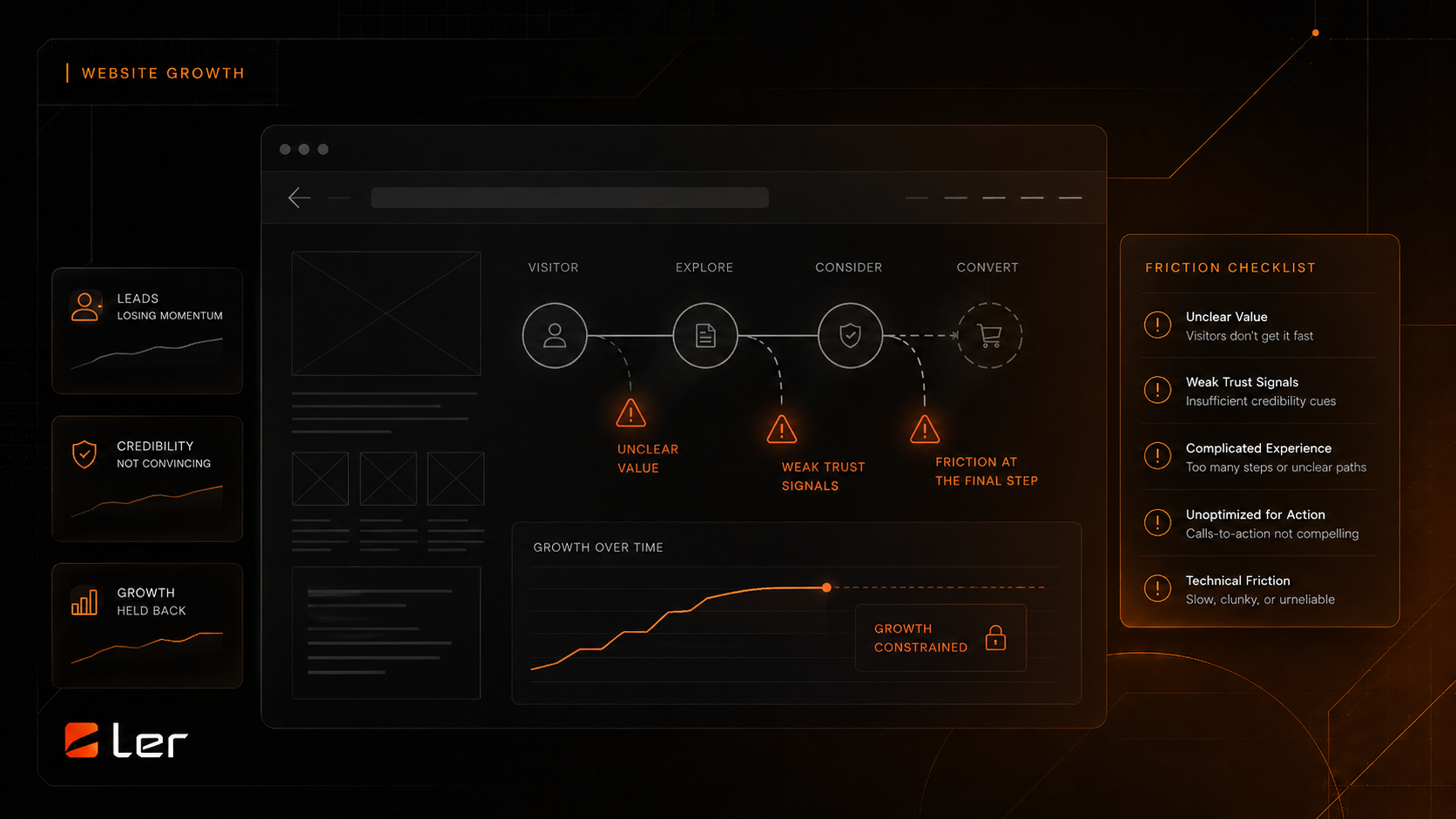
How to Know When Your Website Is Holding Back Growth
Signs that the website is creating friction for leads, credibility, and growth.