
Blog
How to Know When Your Website Is Holding Back Growth
 Ed Romero
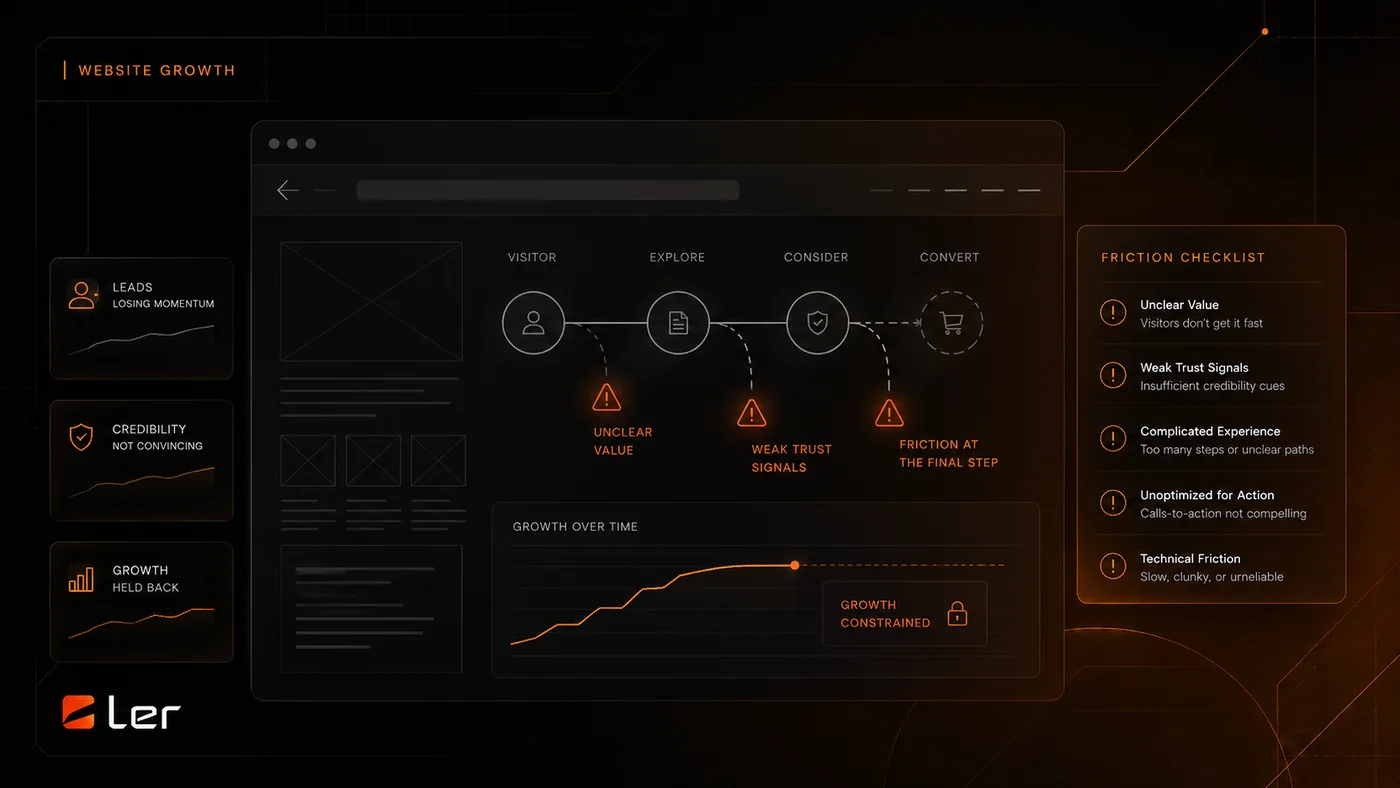
Signs that the website is creating friction for leads, credibility, and growth.
Prospects keep asking the same basic questions
If good prospects keep asking what you do, who you serve, how pricing works, what the next step is, or whether you can handle their situation, the website is not carrying enough of the early sales conversation.
That does not mean the site needs to answer every edge case. It means the core offer, proof, process, and next step should be clear enough that a qualified visitor arrives warmer and better informed.
Traffic exists, but intent is leaking
Growth can stall when the site receives visitors but gives them no confident path forward. Common signs include low form completion, high exit rates on service pages, weak booking clicks, or analytics that show people bouncing between pages without action.
Look at the path from homepage to service page to proof to contact. If every page introduces a new message, the visitor has to rebuild trust from scratch.
The brand does not match the business anymore
Many established companies outgrow their first website. The business becomes more capable, more specialized, or more premium, but the website still looks like an early-stage version of the company.
That gap affects pricing power and trust. Prospects make fast judgments from visual consistency, writing quality, proof, speed, and how easy it is to understand the offer.
Internal teams work around the site
If sales sends separate PDFs, operations explains process manually, or support repeatedly corrects what the website says, the site is not aligned with the business anymore.
The fix is usually not one page. It is a clearer information system: sharper service pages, stronger proof, better forms, cleaner follow-up, and content that matches how the team actually sells and delivers.
How to apply this to your site
Choose one important page and review it through the visitor's lens. Ask what the visitor needs to understand, believe, and do before they are ready for the next step.
Then look for the first point of friction: vague copy, weak proof, slow loading, too many choices, missing service details, unclear pricing signals, or a call to action that does not match intent.
What LER looks for in a review
I look at message clarity, page structure, proof placement, mobile behavior, conversion paths, speed, maintenance risk, and whether the website matches the real maturity of the business.
The best recommendations are prioritized. A website rarely needs every possible improvement at once; it needs the next right improvement in the right order.
Read what’s next

SEO Checklist Before Launching a Redesigned Website
A pre-launch SEO checklist for redesigned websites covering redirects, metadata, content, analytics, speed, and search visibility.

Website Redesign Cost Factors for Established Businesses
A plain-English breakdown of the factors that change website redesign scope, complexity, and timeline without publishing private project pricing.
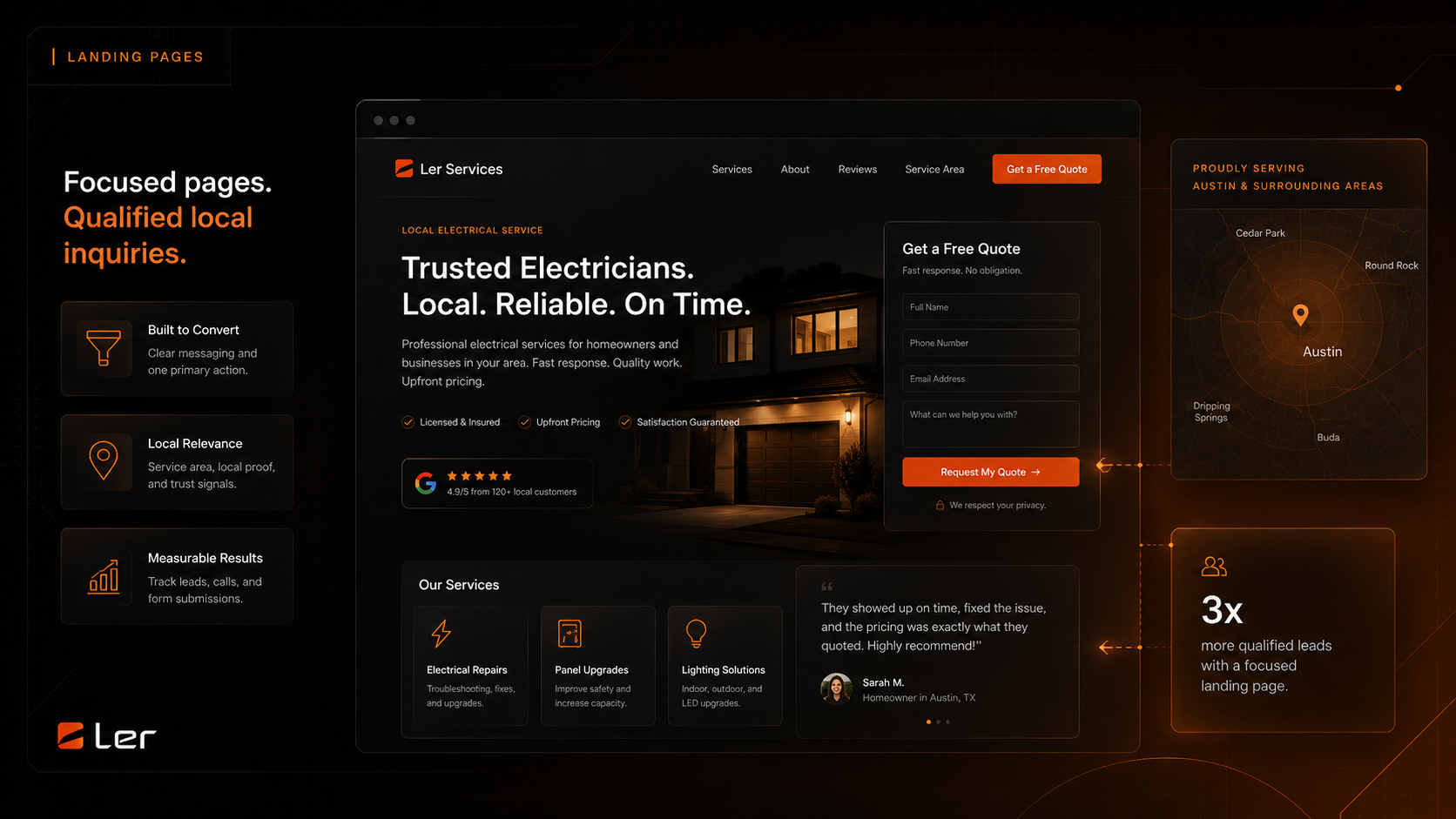
Local Service Landing Page Structure That Converts
A practical structure for local service landing pages that need clearer offers, stronger proof, better location signals, and more qualified inquiries.

What to Prepare Before a Website Growth Audit
What to gather before a website audit so the recommendations are sharper and easier to act on.

Why Your Contact Form Is Not Enough
Why better intake, routing, confirmation, and follow-up matter after the form submission.
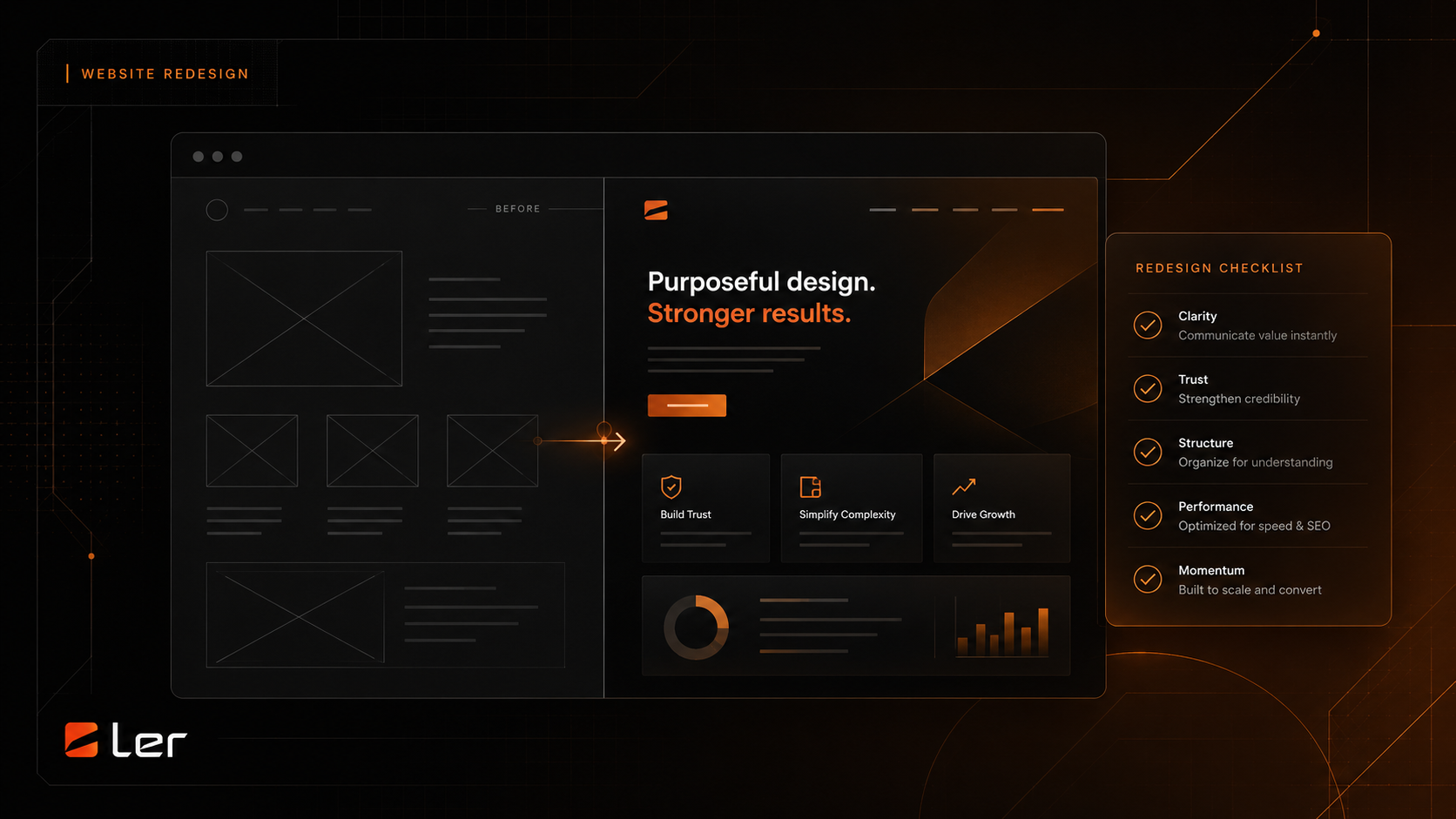
Website Redesign Checklist for Established Businesses
A practical checklist for redesigning a website without losing clarity, trust, or momentum.