
Blog
How Clear Client Onboarding Keeps Projects Moving
 Ed Romero
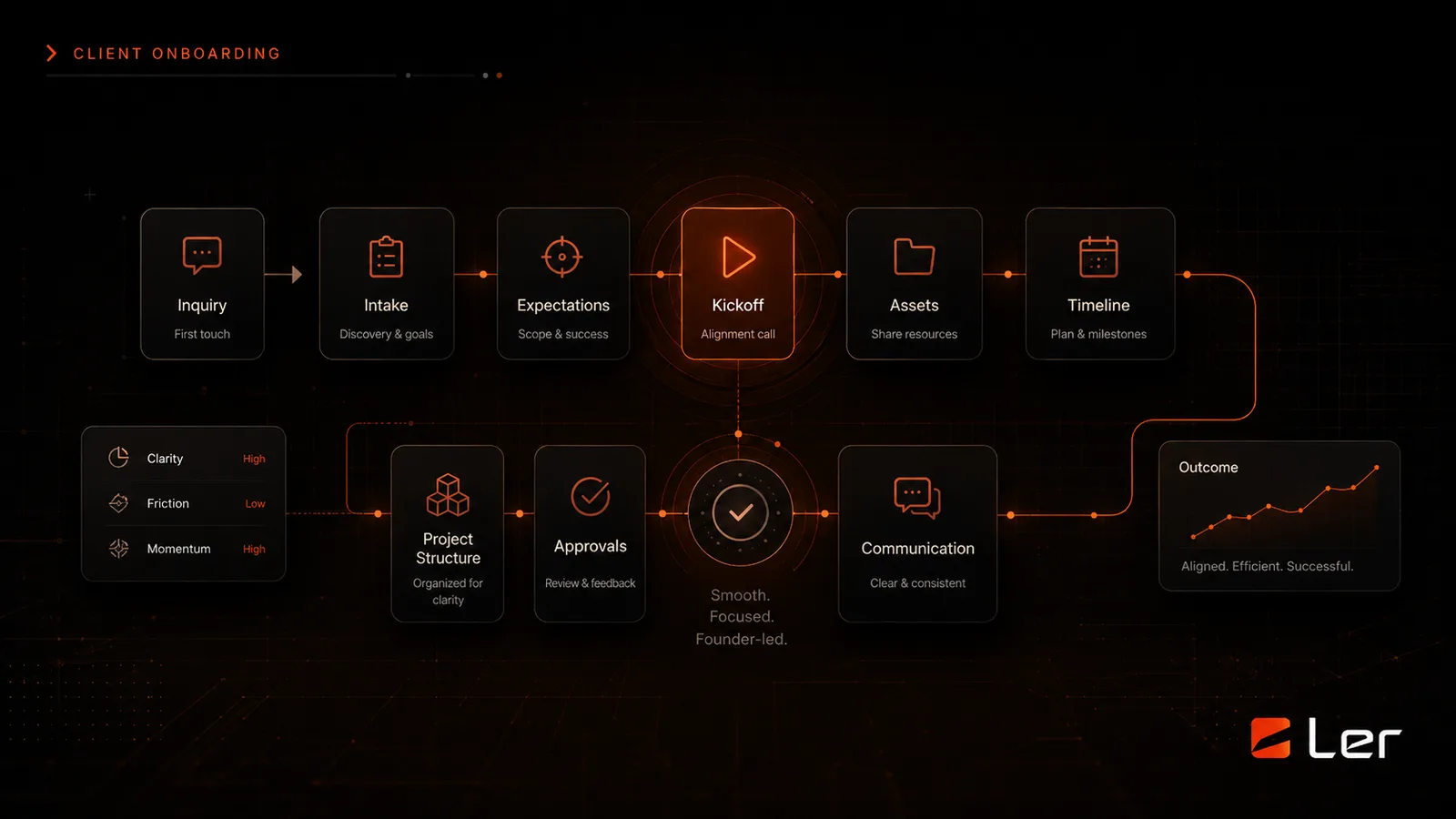
How clear intake, expectations, and project structure make digital work move better.
Onboarding sets the working rhythm
Strong onboarding gives the project a shared operating system. It confirms what is being built, who approves, what assets are needed, where communication happens, and what happens first.
Without that structure, good work gets slowed by avoidable questions: who has access, which logo is current, which page is approved, and what the deadline actually means.
Gather access and assets early
Website projects often need domain access, hosting access, CMS access, analytics, brand assets, photos, copy, product details, forms, booking tools, and third-party account context.
Collecting those inputs early prevents the project from stalling when design or development is ready to move. It also reveals risk before launch week.
Make feedback specific
Useful feedback names the page, section, decision, and reason. "Make the service cards more direct for new visitors" is easier to act on than "make it pop".
Good onboarding teaches the feedback format before review starts. That keeps approvals clean and prevents personal preference from overwhelming business goals.
Keep the next step visible
Clients should know what LER is doing, what is waiting on them, and what comes next. That may happen through email, WhatsApp, Asana, or a shared board depending on the project.
The best process feels simple because the complexity is organized behind the scenes.
How to apply this on your next project
Before kickoff, gather the assets, access, decision-makers, deadlines, and known constraints in one place. The cleaner the input, the faster the project can move into useful work.
Use a shared source of truth for approvals and open questions. That can be email, Asana, or another agreed channel, but it should be clear where final decisions live.
What good onboarding prevents
Good onboarding prevents duplicated feedback, missing credentials, stale brand assets, unclear launch windows, surprise stakeholders, and avoidable rework.
It also makes the relationship calmer. Everyone can see what is waiting, what is moving, and what needs a decision.
Read what’s next
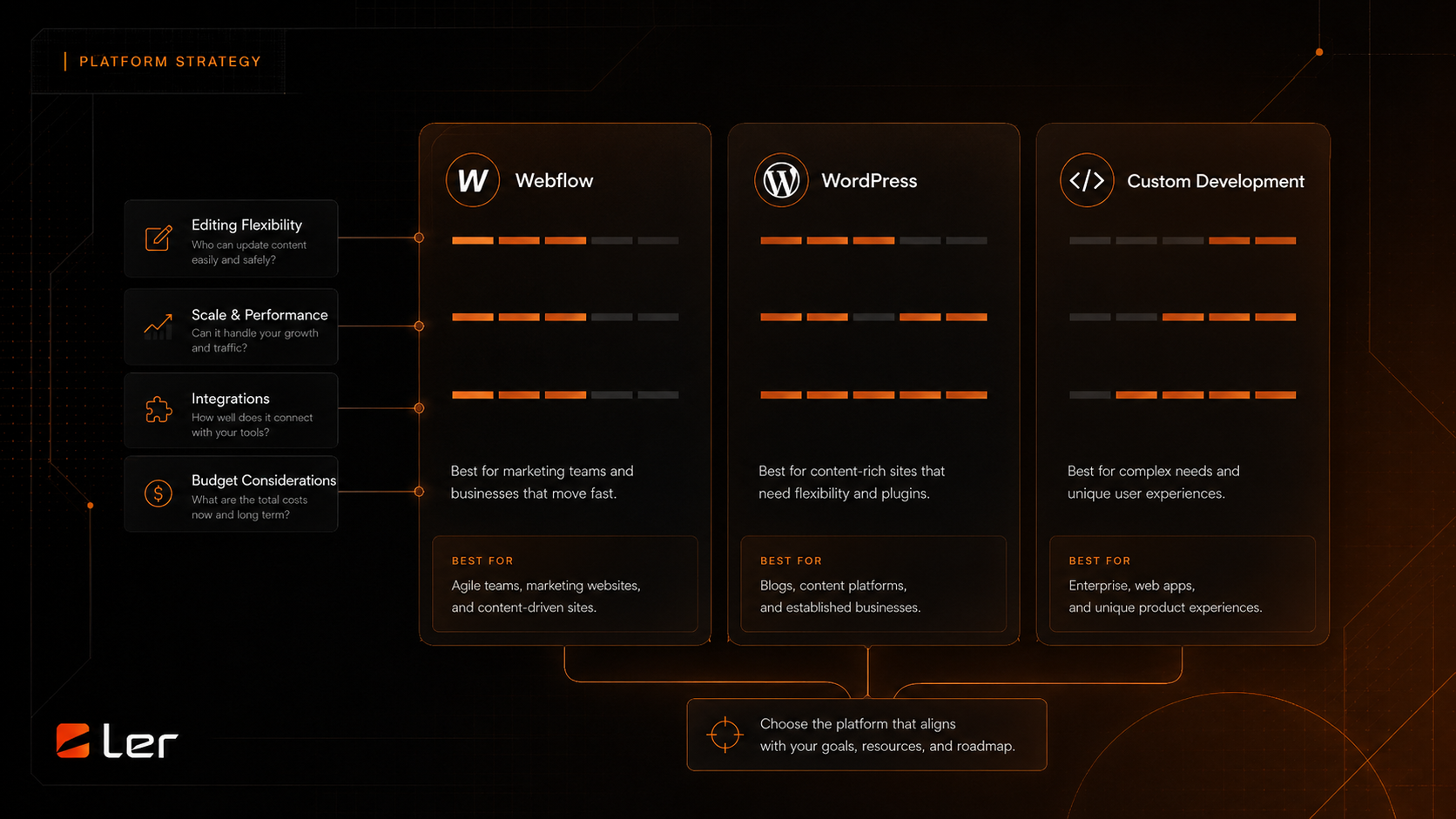
Affiliate Program vs. Agency Partner Program
How to choose between making a useful introduction and building a deeper delivery relationship with LERWS.

WordPress Maintenance Checklist for Business Owners
A practical WordPress maintenance checklist for business owners who want safer updates, stronger backups, and fewer website surprises.

SEO Checklist Before Launching a Redesigned Website
A pre-launch SEO checklist for redesigned websites covering redirects, metadata, content, analytics, speed, and search visibility.

Website Redesign Cost Factors for Established Businesses
A plain-English breakdown of the factors that change website redesign scope, complexity, and timeline without publishing private project pricing.
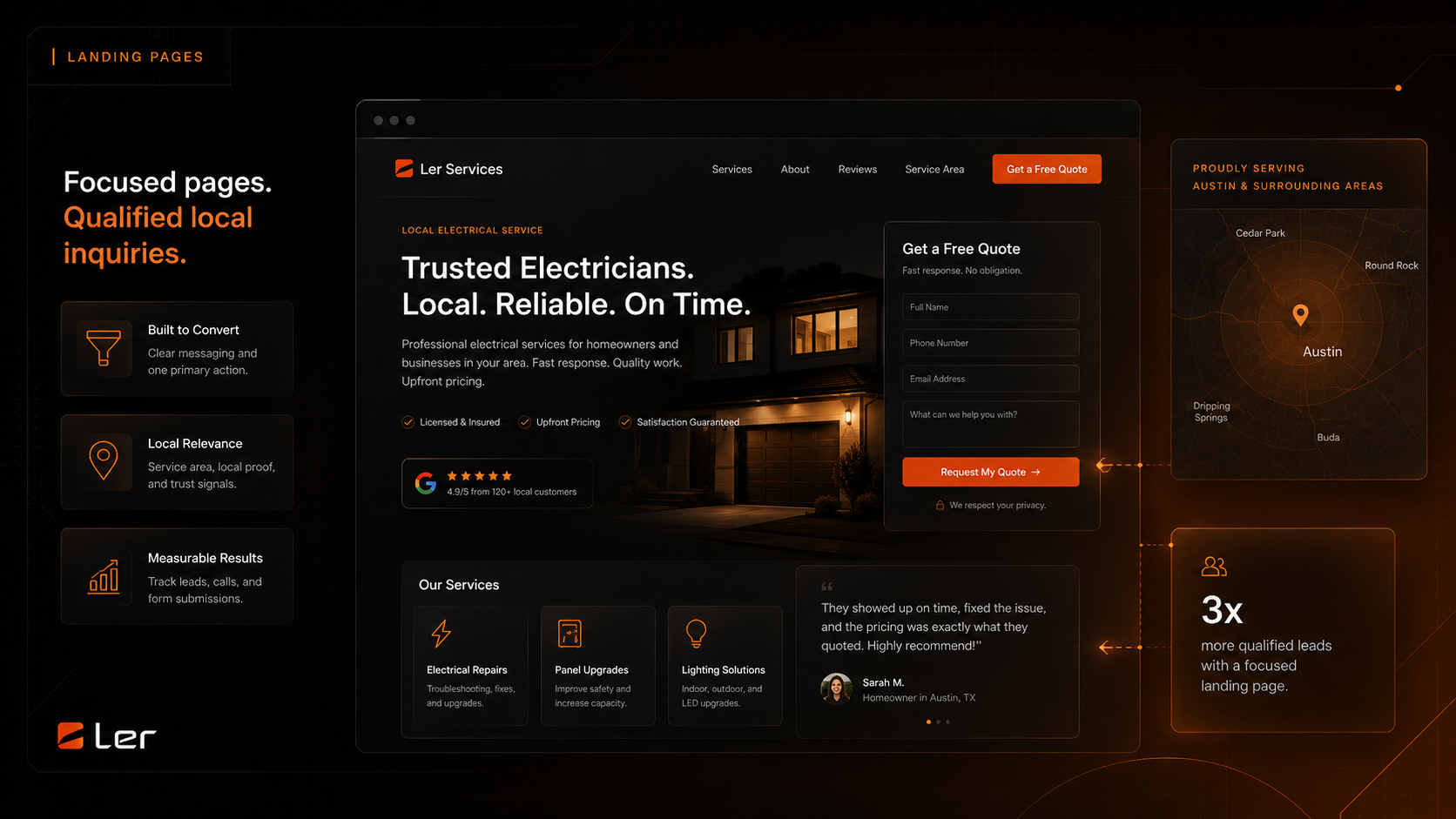
Local Service Landing Page Structure That Converts
A practical structure for local service landing pages that need clearer offers, stronger proof, better location signals, and more qualified inquiries.
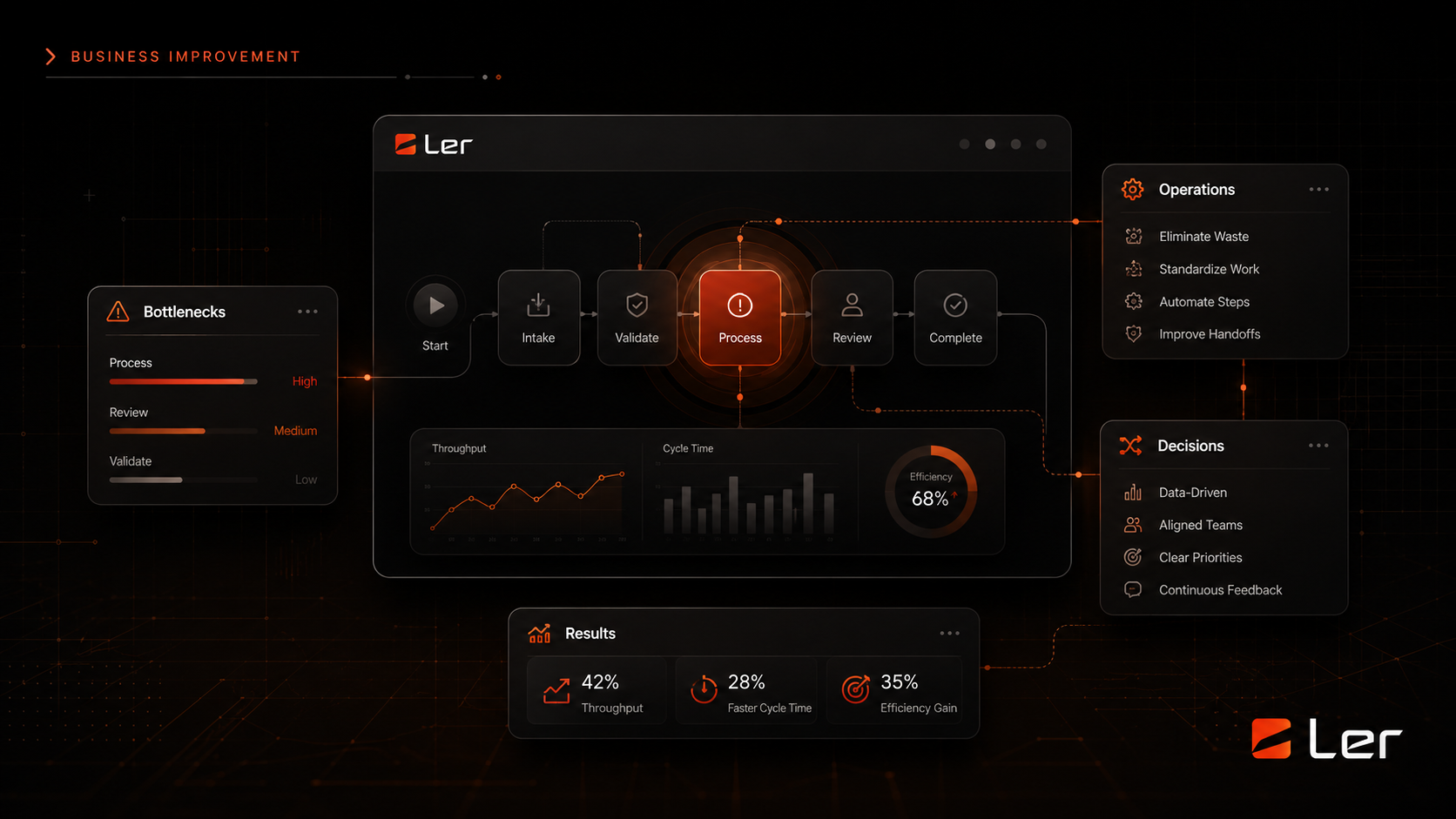
How to Choose Website KPIs That Matter
How to pick website metrics that connect to real business decisions instead of vanity reporting.