
Blog
What Makes a Homepage Convert Better
 Ed Romero
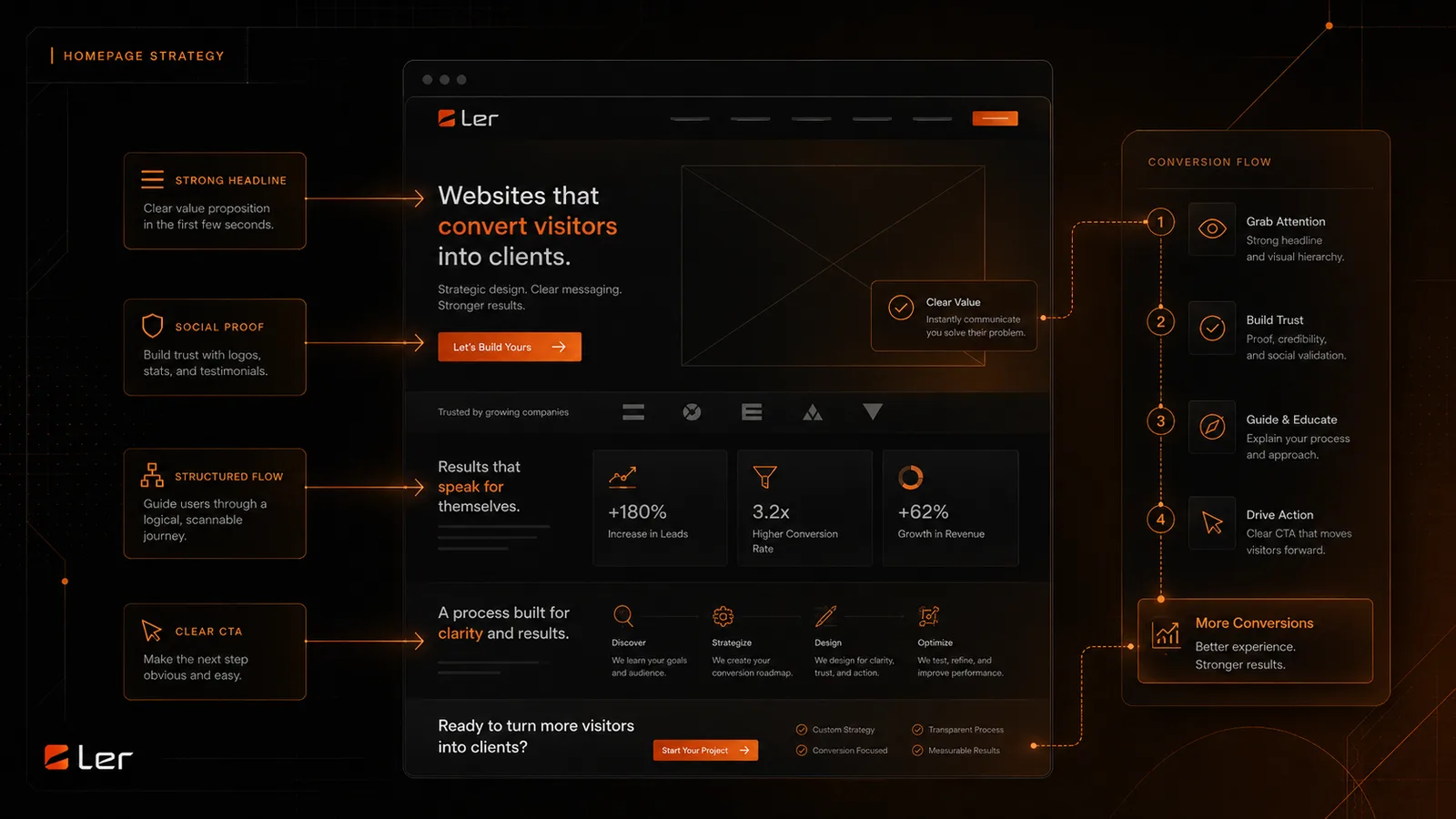
How structure, clarity, proof, and next steps make a homepage more effective.
Say what the business does quickly
A homepage should not make visitors decode the offer. The first screen should establish the business category, audience, value, and next step with plain language.
Creative phrasing can work after clarity is established. If the headline is clever but the visitor cannot explain what the company does, the page is asking too much.
Use proof near the promise
Strong homepages pair claims with proof. That proof may be client logos, case studies, reviews, project visuals, credentials, process clarity, years in business, or concrete service examples.
Proof works best when it appears close to the claim it supports. A "trusted by" strip, relevant testimonial, or selected project can reduce hesitation early.
Guide the visitor by intent
Not every visitor is ready for the same action. Some need to understand services. Some need proof. Some are ready to contact. The homepage should guide those intents without becoming a directory.
A good structure usually moves from positioning to proof, service paths, differentiation, process, and a direct call to action. Each section earns the next scroll.
Make the next step obvious
Conversion improves when the next step is easy to find and low-friction to start. The CTA should name the action clearly: book a call, request a quote, start a project, view work, or get support.
Do not make every button equal. The primary action should be visually clear. Secondary actions can support visitors who need more context before contacting you.
How to apply this to your site
Choose one important page and review it through the visitor's lens. Ask what the visitor needs to understand, believe, and do before they are ready for the next step.
Then look for the first point of friction: vague copy, weak proof, slow loading, too many choices, missing service details, unclear pricing signals, or a call to action that does not match intent.
What LER looks for in a review
I look at message clarity, page structure, proof placement, mobile behavior, conversion paths, speed, maintenance risk, and whether the website matches the real maturity of the business.
The best recommendations are prioritized. A website rarely needs every possible improvement at once; it needs the next right improvement in the right order.
Read what’s next

SEO Checklist Before Launching a Redesigned Website
A pre-launch SEO checklist for redesigned websites covering redirects, metadata, content, analytics, speed, and search visibility.

Website Redesign Cost Factors for Established Businesses
A plain-English breakdown of the factors that change website redesign scope, complexity, and timeline without publishing private project pricing.
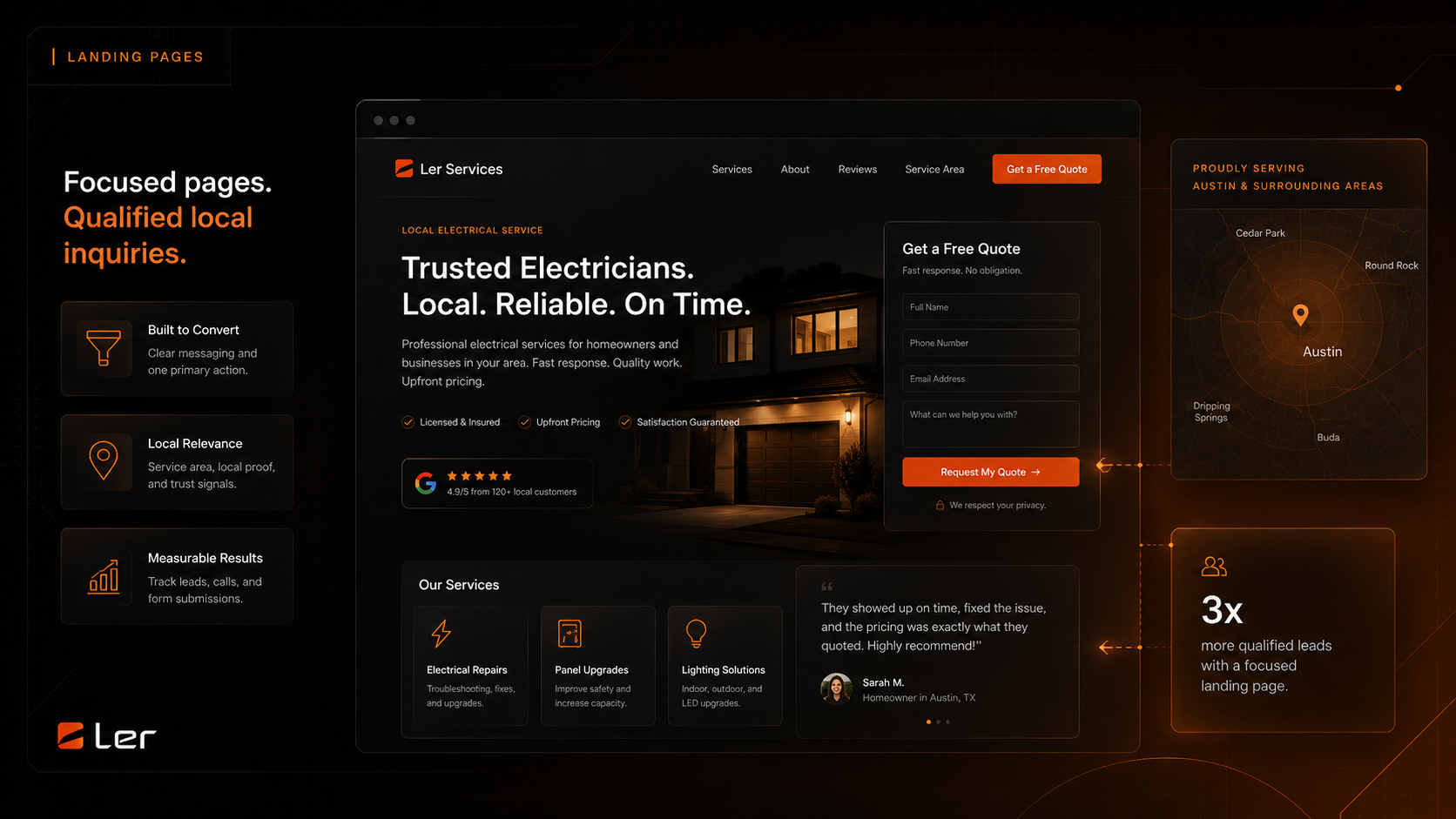
Local Service Landing Page Structure That Converts
A practical structure for local service landing pages that need clearer offers, stronger proof, better location signals, and more qualified inquiries.

What to Prepare Before a Website Growth Audit
What to gather before a website audit so the recommendations are sharper and easier to act on.

Why Your Contact Form Is Not Enough
Why better intake, routing, confirmation, and follow-up matter after the form submission.
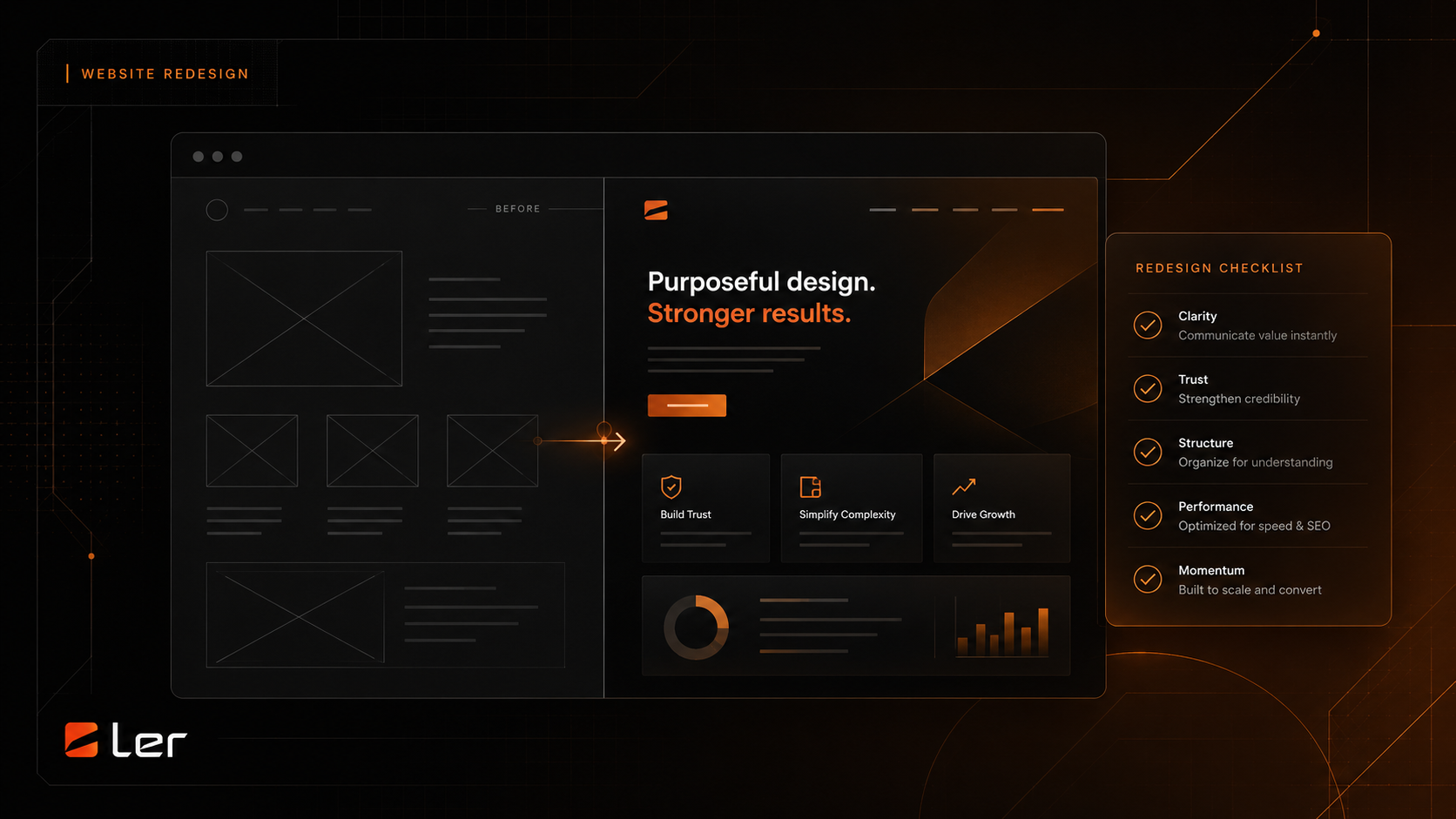
Website Redesign Checklist for Established Businesses
A practical checklist for redesigning a website without losing clarity, trust, or momentum.