
Blog
How to Plan Website Content Before Design Starts
 Ed Romero
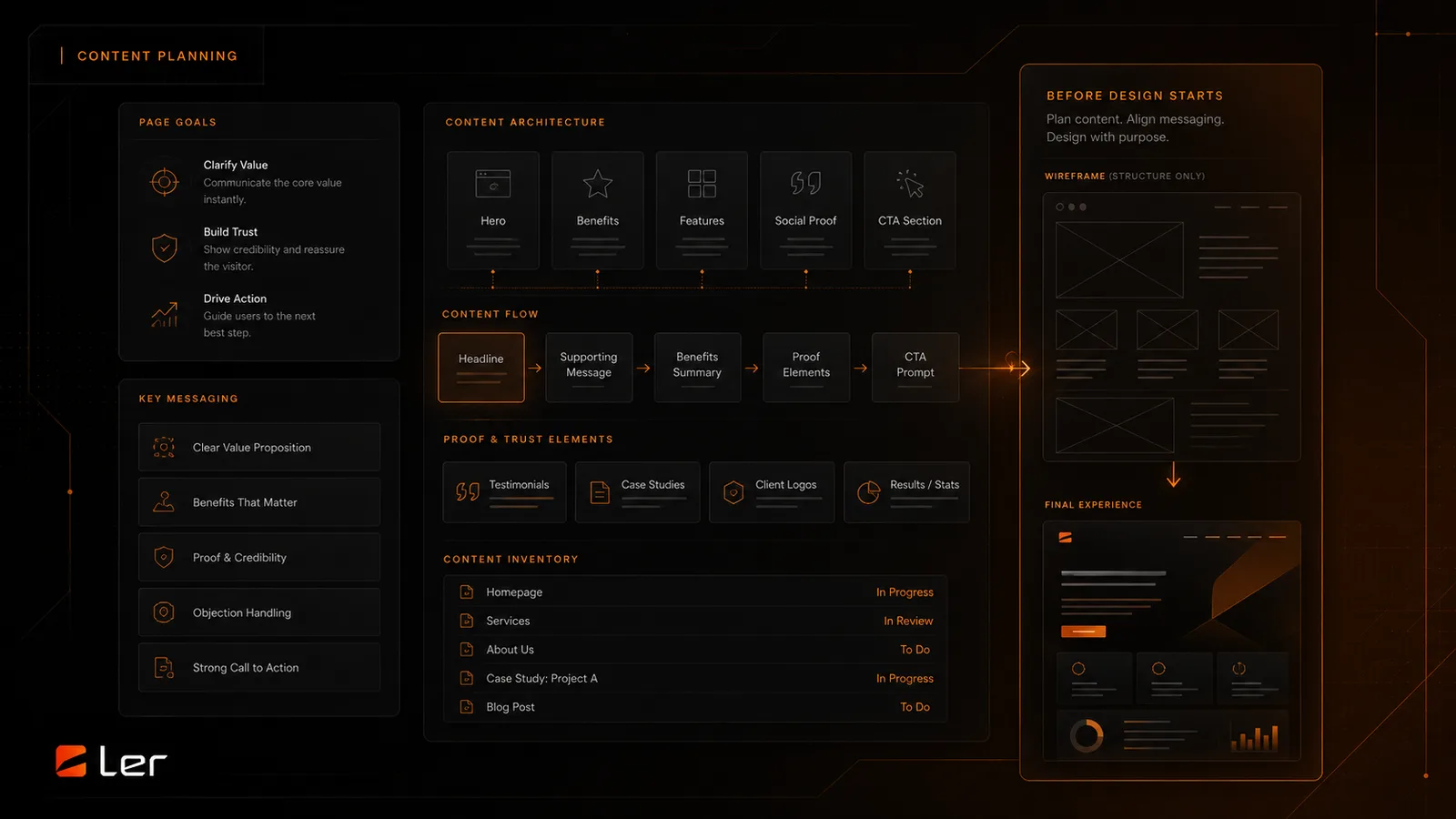
How to organize page goals, messaging, proof, and content before the design phase.
Define what each page must do
A page should have a job. The homepage orients. Service pages qualify. Case studies prove capability. About pages build trust. Contact pages reduce friction.
When the job is unclear, design becomes decoration. When the job is clear, design can support the decision the visitor needs to make.
Collect proof before writing claims
Strong content depends on proof: projects, reviews, outcomes, client names, credentials, process details, before-and-after examples, and real answers from the team.
If proof is missing, the copy gets vague. Gather the evidence early so the page can make fewer claims and support the claims it keeps.
Map questions by visitor stage
A first-time visitor needs category clarity and trust. A serious buyer needs process, scope, price signals, and fit. A ready prospect needs the next step and confidence that someone will respond.
Planning content by stage keeps the site from dumping every detail into one section. It creates a clean path from attention to action.
Write enough before design, not everything
Design does not need final wording for every line, but it does need real content direction. Placeholder text hides hard decisions about hierarchy, proof, and page length.
Draft the main messages, section goals, proof points, and calls to action before design starts. Refine the exact copy as the layout takes shape.
How to apply this to your site
Choose one important page and review it through the visitor's lens. Ask what the visitor needs to understand, believe, and do before they are ready for the next step.
Then look for the first point of friction: vague copy, weak proof, slow loading, too many choices, missing service details, unclear pricing signals, or a call to action that does not match intent.
What LER looks for in a review
I look at message clarity, page structure, proof placement, mobile behavior, conversion paths, speed, maintenance risk, and whether the website matches the real maturity of the business.
The best recommendations are prioritized. A website rarely needs every possible improvement at once; it needs the next right improvement in the right order.
Read what’s next

SEO Checklist Before Launching a Redesigned Website
A pre-launch SEO checklist for redesigned websites covering redirects, metadata, content, analytics, speed, and search visibility.

Website Redesign Cost Factors for Established Businesses
A plain-English breakdown of the factors that change website redesign scope, complexity, and timeline without publishing private project pricing.

Local Service Landing Page Structure That Converts
A practical structure for local service landing pages that need clearer offers, stronger proof, better location signals, and more qualified inquiries.

What to Prepare Before a Website Growth Audit
What to gather before a website audit so the recommendations are sharper and easier to act on.

Why Your Contact Form Is Not Enough
Why better intake, routing, confirmation, and follow-up matter after the form submission.
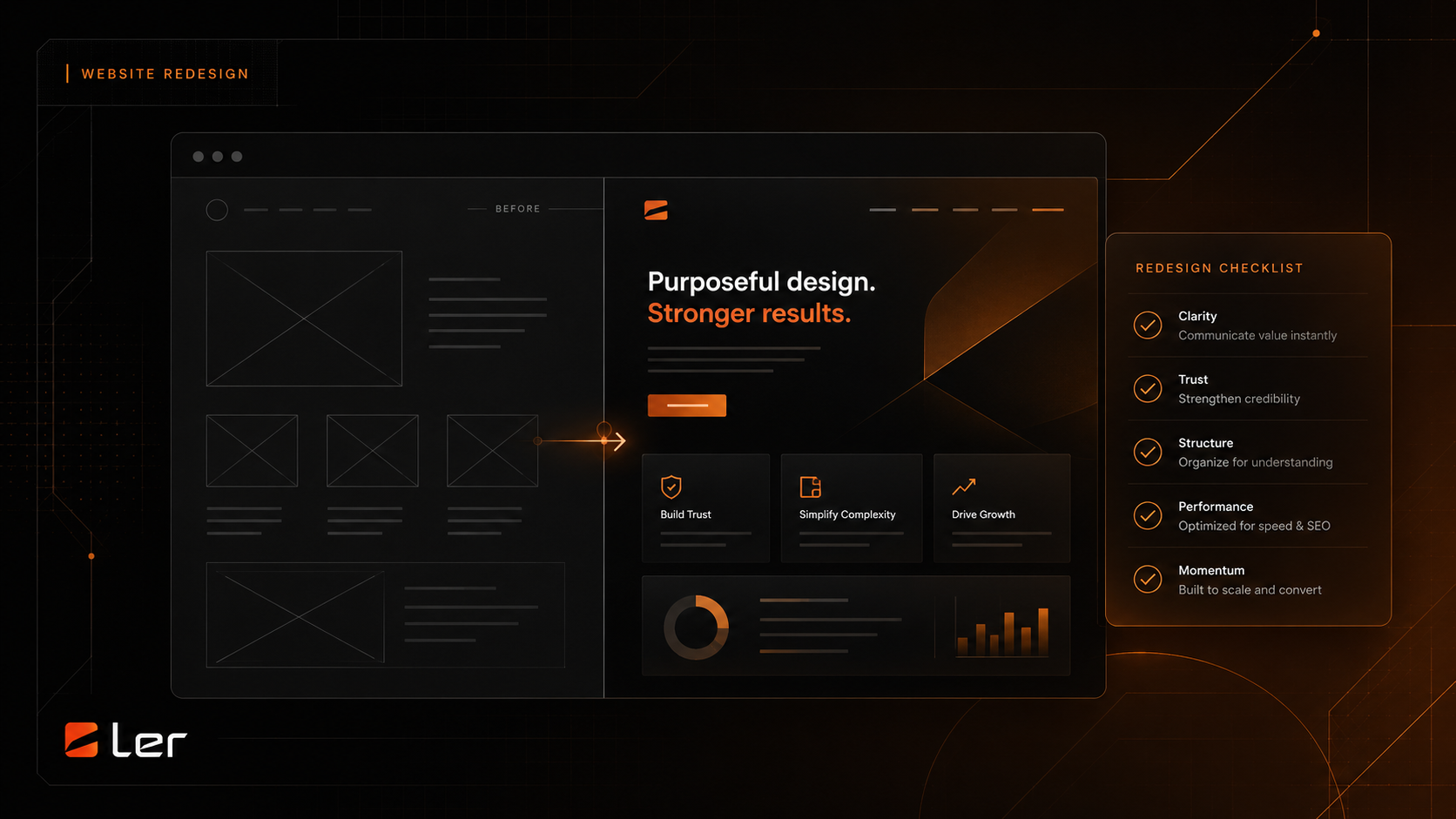
Website Redesign Checklist for Established Businesses
A practical checklist for redesigning a website without losing clarity, trust, or momentum.